
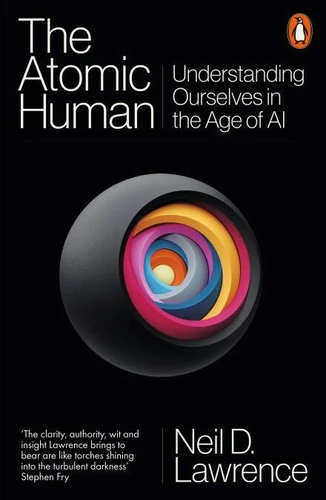
The Atomic Human. Understanding Ourselves in the Age of AI
Par :Formats :
Disponible dans votre compte client Decitre ou Furet du Nord dès validation de votre commande. Le format ePub protégé est :
- Compatible avec une lecture sur My Vivlio (smartphone, tablette, ordinateur)
- Compatible avec une lecture sur liseuses Vivlio
- Pour les liseuses autres que Vivlio, vous devez utiliser le logiciel Adobe Digital Edition. Non compatible avec la lecture sur les liseuses Kindle, Remarkable et Sony
- Non compatible avec un achat hors France métropolitaine
 , qui est-ce ?
Notre partenaire de plateforme de lecture numérique où vous retrouverez l'ensemble de vos ebooks gratuitement
Pour en savoir plus sur nos ebooks, consultez notre aide en ligne ici
C'est si simple ! Lisez votre ebook avec l'app Vivlio sur votre tablette, mobile ou ordinateur :

- Nombre de pages448
- FormatePub
- ISBN978-1-80206-211-3
- EAN9781802062113
- Date de parution06/06/2024
- Protection num.Adobe DRM
- Infos supplémentairesepub
- ÉditeurPenguin
Résumé
'An utterly absorbing account of humans, computers, and how much they differ' Dame Diane Coyle, author of Cogs and MonstersWhat does Artificial Intelligence mean for our identity? Our fascination with AI stems from the perceived uniqueness of human intelligence. We believe it's what differentiates us. Fears of AI not only concern how it invades our digital lives, but also the implied threat of an intelligence that displaces us from our position at the centre of the world.
Neil D. Lawrence's visionary book shows why these fears may be misplaced. Atomism, proposed by Democritus, suggested it was impossible to continue dividing matter down into ever smaller components: eventually we reach a point where a cut cannot be made (the Greek for uncuttable is 'atom'). In the same way, by slicing away at the facets of human intelligence that can be replaced by machines, AI uncovers what is left: an indivisible core that is the essence of humanity.
Human intelligence has evolved across hundreds of thousands of years. Due to our physical and cognitive constraints over that time, it is social and highly embodied. By contrasting our capabilities with machine intelligence, The Atomic Human reveals the technical origins, capabilities and limitations of AI systems, and how they should be wielded. Not just by the experts, but ordinary people. Understanding this will enable readers to choose the future we want - either one where AI is a tool for us, or where we become a tool of AI - and how to counteract the digital oligarchy to maintain the fabric of an open, fair and democratic society.
Neil D. Lawrence's visionary book shows why these fears may be misplaced. Atomism, proposed by Democritus, suggested it was impossible to continue dividing matter down into ever smaller components: eventually we reach a point where a cut cannot be made (the Greek for uncuttable is 'atom'). In the same way, by slicing away at the facets of human intelligence that can be replaced by machines, AI uncovers what is left: an indivisible core that is the essence of humanity.
Human intelligence has evolved across hundreds of thousands of years. Due to our physical and cognitive constraints over that time, it is social and highly embodied. By contrasting our capabilities with machine intelligence, The Atomic Human reveals the technical origins, capabilities and limitations of AI systems, and how they should be wielded. Not just by the experts, but ordinary people. Understanding this will enable readers to choose the future we want - either one where AI is a tool for us, or where we become a tool of AI - and how to counteract the digital oligarchy to maintain the fabric of an open, fair and democratic society.