
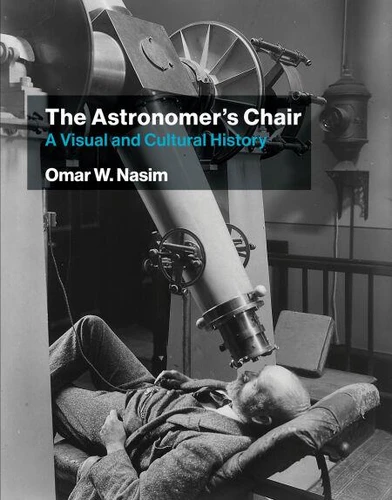
The Astronomer's Chair. A Visual and Cultural History
Par :Formats :
Disponible dans votre compte client Decitre ou Furet du Nord dès validation de votre commande. Le format ePub protégé est :
- Compatible avec une lecture sur My Vivlio (smartphone, tablette, ordinateur)
- Compatible avec une lecture sur liseuses Vivlio
- Pour les liseuses autres que Vivlio, vous devez utiliser le logiciel Adobe Digital Edition. Non compatible avec la lecture sur les liseuses Kindle, Remarkable et Sony
- Non compatible avec un achat hors France métropolitaine
 , qui est-ce ?
Notre partenaire de plateforme de lecture numérique où vous retrouverez l'ensemble de vos ebooks gratuitement
Pour en savoir plus sur nos ebooks, consultez notre aide en ligne ici
C'est si simple ! Lisez votre ebook avec l'app Vivlio sur votre tablette, mobile ou ordinateur :

- Nombre de pages312
- FormatePub
- ISBN978-0-262-36253-5
- EAN9780262362535
- Date de parution21/09/2021
- Protection num.Adobe DRM
- Taille357 Mo
- Infos supplémentairesepub
- ÉditeurThe MIT Press
Résumé
The astronomer's observing chair as both image and object, and the story it tells about a particular kind of science and a particular view of history. The astronomer's chair is a leitmotif in the history of astronomy, appearing in hundreds of drawings, prints, and photographs from a variety of sources. Nineteenth-century stargazers in particular seemed eager to display their observing chairs-task-specific, often mechanically adjustable observatory furniture designed for use in conjunction with telescopes.
But what message did they mean to send with these images? In The Astronomer's Chair, Omar W. Nasim considers these specialized chairs as both image and object, offering an original framework for linking visual and material cultures. Observing chairs, Nasim ingeniously argues, showcased and embodied forms of scientific labor, personae, and bodily practice that appealed to bourgeois sensibilities. Viewing image and object as connected parts of moral, epistemic, and visual economies of empire, Nasim shows that nineteenth-century science was represented in terms of comfort and energy, and that "manly" postures of Western astronomers at work in specialized chairs were contrasted pointedly with images of "effete" and cross-legged "Oriental" astronomers.
Extending his historical analysis into the twentieth century, Nasim reexamines what he argues to be a famous descendant of the astronomer's chair: Freud's psychoanalytic couch, which directed observations not outward toward the stars but inward toward the stratified universe of the psyche. But whether in conjunction with the mind or the heavens, the observing chair was a point of entry designed for specialists that also portrayed widely held assumptions about who merited epistemic access to these realms in the first place. With more than 100 illustrations, many in color; flexibound.
But what message did they mean to send with these images? In The Astronomer's Chair, Omar W. Nasim considers these specialized chairs as both image and object, offering an original framework for linking visual and material cultures. Observing chairs, Nasim ingeniously argues, showcased and embodied forms of scientific labor, personae, and bodily practice that appealed to bourgeois sensibilities. Viewing image and object as connected parts of moral, epistemic, and visual economies of empire, Nasim shows that nineteenth-century science was represented in terms of comfort and energy, and that "manly" postures of Western astronomers at work in specialized chairs were contrasted pointedly with images of "effete" and cross-legged "Oriental" astronomers.
Extending his historical analysis into the twentieth century, Nasim reexamines what he argues to be a famous descendant of the astronomer's chair: Freud's psychoanalytic couch, which directed observations not outward toward the stars but inward toward the stratified universe of the psyche. But whether in conjunction with the mind or the heavens, the observing chair was a point of entry designed for specialists that also portrayed widely held assumptions about who merited epistemic access to these realms in the first place. With more than 100 illustrations, many in color; flexibound.