SOLDES
Jusqu'à -70% sur une sélection d'articles*

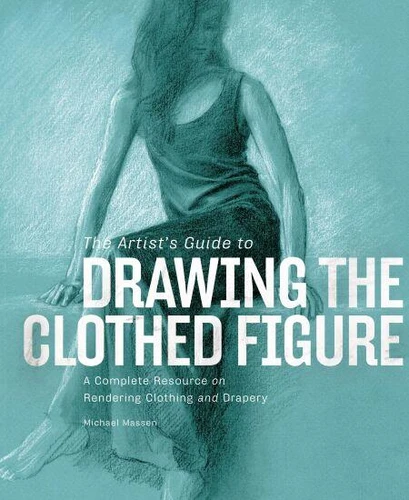
The Artist's Guide to Drawing the Clothed Figure. A Complete Resource on Rendering Clothing and Drapery
Par :Formats :
Disponible dans votre compte client Decitre ou Furet du Nord dès validation de votre commande. Le format ePub protégé est :
- Compatible avec une lecture sur My Vivlio (smartphone, tablette, ordinateur)
- Compatible avec une lecture sur liseuses Vivlio
- Pour les liseuses autres que Vivlio, vous devez utiliser le logiciel Adobe Digital Edition. Non compatible avec la lecture sur les liseuses Kindle, Remarkable et Sony
- Non compatible avec un achat hors France métropolitaine
 , qui est-ce ?
Notre partenaire de plateforme de lecture numérique où vous retrouverez l'ensemble de vos ebooks gratuitement
Pour en savoir plus sur nos ebooks, consultez notre aide en ligne ici
C'est si simple ! Lisez votre ebook avec l'app Vivlio sur votre tablette, mobile ou ordinateur :

- Nombre de pages224
- FormatePub
- ISBN978-0-8230-0120-0
- EAN9780823001200
- Date de parution20/12/2011
- Protection num.Adobe DRM
- Taille11 Mo
- Infos supplémentairesepub
- ÉditeurWatson-Guptill
Résumé
In order to effectively draw clothing and drapery, an artist must recognize the basic shapes of clothing and how the principles of physics act upon those shapes. Beginning with the basic shapes of clothing and the anatomy of folds, and progressing to final rendering techniques of both sculpted and loose drapery on solid forms-including how motion affects wrinkles, folds, and waves, The Artist's Guide to Drawing the Clothed Figure presents a novel and completely thorough approach to understanding the mechanics of drapery.
This comprehensive resource examines the mechanical principles behind the formation of folds: simple wave patterns, intersecting wave patterns, and tertiary effects upon these two, such as twisting and flowing forms. The book breaks down all clothing into three types: sculpted forms, loose drapery, and, most especially, tubes. Once these mechanics are established, various techniques for rendering clothing are presented, including how factors such as the stiffness, thickness, or texture of a particular material can affect the appearance of an article of clothing.
Throughout, the author examines examples from master draftspersons-old masters, cartoonists, illustrators, and fashion illustrators, including Leonardo da Vinci, Ingres, Degas, Joseph Christian, Leyendecker, Charles Dana Gibson, Raphael, and Will Eisner-to see how they interpreted this information.
This comprehensive resource examines the mechanical principles behind the formation of folds: simple wave patterns, intersecting wave patterns, and tertiary effects upon these two, such as twisting and flowing forms. The book breaks down all clothing into three types: sculpted forms, loose drapery, and, most especially, tubes. Once these mechanics are established, various techniques for rendering clothing are presented, including how factors such as the stiffness, thickness, or texture of a particular material can affect the appearance of an article of clothing.
Throughout, the author examines examples from master draftspersons-old masters, cartoonists, illustrators, and fashion illustrators, including Leonardo da Vinci, Ingres, Degas, Joseph Christian, Leyendecker, Charles Dana Gibson, Raphael, and Will Eisner-to see how they interpreted this information.