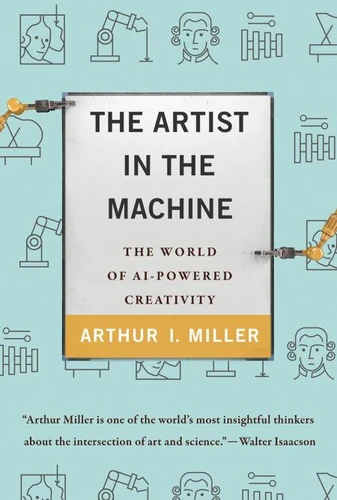
The Artist in the Machine. The World of AI-Powered Creativity
Par :Formats :
Disponible dans votre compte client Decitre ou Furet du Nord dès validation de votre commande. Le format ePub protégé est :
- Compatible avec une lecture sur My Vivlio (smartphone, tablette, ordinateur)
- Compatible avec une lecture sur liseuses Vivlio
- Pour les liseuses autres que Vivlio, vous devez utiliser le logiciel Adobe Digital Edition. Non compatible avec la lecture sur les liseuses Kindle, Remarkable et Sony
- Non compatible avec un achat hors France métropolitaine
 , qui est-ce ?
Notre partenaire de plateforme de lecture numérique où vous retrouverez l'ensemble de vos ebooks gratuitement
Pour en savoir plus sur nos ebooks, consultez notre aide en ligne ici
C'est si simple ! Lisez votre ebook avec l'app Vivlio sur votre tablette, mobile ou ordinateur :

- Nombre de pages432
- FormatePub
- ISBN978-0-262-35460-8
- EAN9780262354608
- Date de parution01/10/2019
- Protection num.Adobe DRM
- Taille23 Mo
- Infos supplémentairesepub
- ÉditeurThe MIT Press
Résumé
A cautiously optimistic study of the AI-powered computers creating art, literature, and music-which may well surpass the creations of humans. Today's computers are composing music that sounds "more Bach than Bach, " turning photographs into paintings in the style of Van Gogh's Starry Night, and even writing screenplays. But are computers truly creative-or are they merely tools to be used by musicians, artists, and writers? In this book, Arthur I.
Miller takes us on a tour of creativity in the age of machines. An authority on creativity, Miller identifies the key factors essential to the creative process, from "the need for introspection" to "the ability to discover the key problem." He talks to people on the cutting edge of artificial intelligence, encountering computers that mimic the brain and machines that have defeated champions in chess, Jeopardy!, and Go.
In the central part of the book, Miller explores the riches of computer-created art, introducing us to artists and computer scientists who have unleashed an artificial neural network to create a nightmarish, multi-eyed dog-cat; taught AI to imagine; developed a robot that paints; created algorithms for poetry; and produced the world's first computer-composed musical, Beyond the Fence, staged by Android Lloyd Webber and friends.
But in order to be truly creative, machines will need to step into the world. He probes the nature of consciousness and speaks to researchers trying to develop emotions and consciousness in computers. Miller argues that computers can already be as creative as humans-and someday will surpass us. But this is not a dystopian account; Miller celebrates the creative possibilities of artificial intelligence in art, music, and literature.
Miller takes us on a tour of creativity in the age of machines. An authority on creativity, Miller identifies the key factors essential to the creative process, from "the need for introspection" to "the ability to discover the key problem." He talks to people on the cutting edge of artificial intelligence, encountering computers that mimic the brain and machines that have defeated champions in chess, Jeopardy!, and Go.
In the central part of the book, Miller explores the riches of computer-created art, introducing us to artists and computer scientists who have unleashed an artificial neural network to create a nightmarish, multi-eyed dog-cat; taught AI to imagine; developed a robot that paints; created algorithms for poetry; and produced the world's first computer-composed musical, Beyond the Fence, staged by Android Lloyd Webber and friends.
But in order to be truly creative, machines will need to step into the world. He probes the nature of consciousness and speaks to researchers trying to develop emotions and consciousness in computers. Miller argues that computers can already be as creative as humans-and someday will surpass us. But this is not a dystopian account; Miller celebrates the creative possibilities of artificial intelligence in art, music, and literature.