
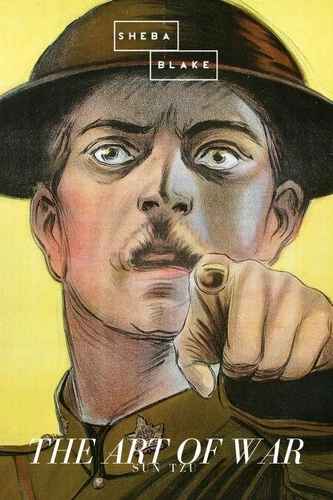
The Art of War
Par :Formats :
Disponible dans votre compte client Decitre ou Furet du Nord dès validation de votre commande. Le format ePub est :
- Compatible avec une lecture sur My Vivlio (smartphone, tablette, ordinateur)
- Compatible avec une lecture sur liseuses Vivlio
- Pour les liseuses autres que Vivlio, vous devez utiliser le logiciel Adobe Digital Edition. Non compatible avec la lecture sur les liseuses Kindle, Remarkable et Sony
 , qui est-ce ?
Notre partenaire de plateforme de lecture numérique où vous retrouverez l'ensemble de vos ebooks gratuitement
Pour en savoir plus sur nos ebooks, consultez notre aide en ligne ici
C'est si simple ! Lisez votre ebook avec l'app Vivlio sur votre tablette, mobile ou ordinateur :

- Nombre de pages118
- FormatePub
- ISBN978-3-96189-612-7
- EAN9783961896127
- Date de parution02/05/2017
- Protection num.pas de protection
- Taille380 Ko
- Infos supplémentairesepub
- ÉditeurChiemsee Verlag
Résumé
The Art of War is an ancient Chinese military treatise dating from the 5th century BC. Attributed to the ancient Chinese military strategist Sun Tzu ("Master Sun", also spelled Sunzi) the text is composed of 13 chapters, each of which is devoted to one aspect of warfare. It is commonly thought of as a definitive work on military strategy and tactics. It was placed at the head of China's Seven Military Classics upon the collection's creation in 1080 by Emperor Shenzong of Song, and has long been the most influential strategy text in East Asia.
It has had an influence on Eastern and Western military thinking, business tactics, legal strategy and beyond. The book was first translated into French in 1772 by the Jesuit Jean Joseph Marie Amiot and a partial translation into English was attempted by British officer Everard Ferguson Calthrop in 1905. The first annotated English translation was completed and published by Lionel Giles in 1910. Leaders such as Mao Zedong, General Võ Nguyên Giáp, General Douglas MacArthur and leaders of Imperial Japan have drawn inspiration from the work.
It has had an influence on Eastern and Western military thinking, business tactics, legal strategy and beyond. The book was first translated into French in 1772 by the Jesuit Jean Joseph Marie Amiot and a partial translation into English was attempted by British officer Everard Ferguson Calthrop in 1905. The first annotated English translation was completed and published by Lionel Giles in 1910. Leaders such as Mao Zedong, General Võ Nguyên Giáp, General Douglas MacArthur and leaders of Imperial Japan have drawn inspiration from the work.