Rolf Dobelli is a bestselling writer and entrepreneur. He is the founder of Zurich. Minds, a community of some of the world's most famed and distinguished thinkers, scientists, artists, and entrepreneurs, and a cofounder of getAbstract, the world's largest publisher of compressed knowledge. He lives in Lucerne, Switzerland.
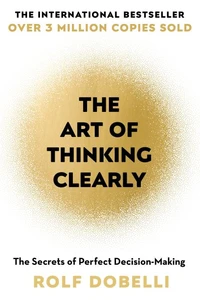
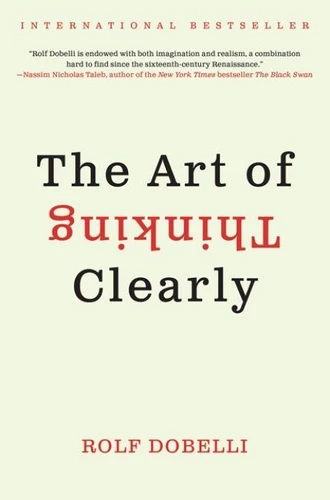
The Art of Thinking Clearly
Par :Formats :
Disponible dans votre compte client Decitre ou Furet du Nord dès validation de votre commande. Le format ePub protégé est :
- Compatible avec une lecture sur My Vivlio (smartphone, tablette, ordinateur)
- Compatible avec une lecture sur liseuses Vivlio
- Pour les liseuses autres que Vivlio, vous devez utiliser le logiciel Adobe Digital Edition. Non compatible avec la lecture sur les liseuses Kindle, Remarkable et Sony
- Non compatible avec un achat hors France métropolitaine
 , qui est-ce ?
Notre partenaire de plateforme de lecture numérique où vous retrouverez l'ensemble de vos ebooks gratuitement
Pour en savoir plus sur nos ebooks, consultez notre aide en ligne ici
C'est si simple ! Lisez votre ebook avec l'app Vivlio sur votre tablette, mobile ou ordinateur :

- FormatePub
- ISBN978-0-06-235980-3
- EAN9780062359803
- Date de parution06/05/2014
- Protection num.Adobe DRM
- Infos supplémentairesepub
- ÉditeurHarper Paperbacks
Résumé
"A serious examination of the faulty reasoning that leads to repeated mistakes by individuals, businesses, and nations.In this fascinating book, Dobelli does not offer a recipe for happiness but a well-considered treatise on avoiding 'self-induced unhappiness.'" - Booklist (starred review)The Art of Thinking Clearly by world-class thinker and entrepreneur Rolf Dobelli is an eye-opening look at human psychology and faulty reasoning - an essential book for anyone who wants to improve their decision-making, avoid "cognitive errors, " and make better choices in all aspects of their lives.
Have you ever: Invested time in something that, with hindsight, just wasn't worth it? Or continued doing something you knew was bad for you? These are examples of cognitive biases, simple errors we all make in our day-to-day thinking. But by understanding these mental models and how to spot them, we can avoid them and make better decisions. Simple, clear, and always surprising, this indispensable book will change the way you think and transform your decision-making-work, at home, every day.
It reveals, in 99 short chapters, the most common errors of judgment, and how to avoid them. Learn to spot the mental traps that derail your thinking every day: Survivorship Bias: Why we systematically overestimate our chances of success and how visiting the "graveyards" of failed projects can clear our minds. Sunk Cost Fallacy: The mental trap that makes us continue with a project or relationship, even when it's a lost cause, just because we've invested so much.
Confirmation Bias: Uncover the mother of all misconceptions and learn why we actively filter new information to fit our existing beliefs. The Anchoring Effect: Discover how irrelevant numbers, from a wheel of fortune to your Social Security digits, can dramatically influence your decisions. Critical Thinking Tools: Go beyond simply knowing what these biases are and learn practical ways to avoid them and transform your choices at work and at home.
Have you ever: Invested time in something that, with hindsight, just wasn't worth it? Or continued doing something you knew was bad for you? These are examples of cognitive biases, simple errors we all make in our day-to-day thinking. But by understanding these mental models and how to spot them, we can avoid them and make better decisions. Simple, clear, and always surprising, this indispensable book will change the way you think and transform your decision-making-work, at home, every day.
It reveals, in 99 short chapters, the most common errors of judgment, and how to avoid them. Learn to spot the mental traps that derail your thinking every day: Survivorship Bias: Why we systematically overestimate our chances of success and how visiting the "graveyards" of failed projects can clear our minds. Sunk Cost Fallacy: The mental trap that makes us continue with a project or relationship, even when it's a lost cause, just because we've invested so much.
Confirmation Bias: Uncover the mother of all misconceptions and learn why we actively filter new information to fit our existing beliefs. The Anchoring Effect: Discover how irrelevant numbers, from a wheel of fortune to your Social Security digits, can dramatically influence your decisions. Critical Thinking Tools: Go beyond simply knowing what these biases are and learn practical ways to avoid them and transform your choices at work and at home.