Most people think they are good at reading others. They are not. They catch the obvious signals and miss everything that actually matters. The real cues are subtle, fast, and hiding in plain sight. A shift in foot direction during a conversation. The half second delay before someone answers a question. The difference between a smile that reaches the eyes and one that doesnt. The words someone repeats without realizing they keep saying them.
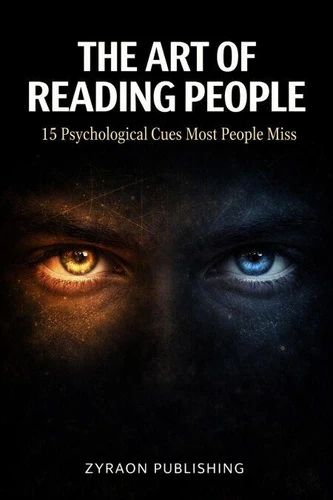
These micro-signals tell you more about a persons true intentions, emotions, and character than anything they will ever say out loud. The Art of Reading People breaks down 15 psychological cues that most people completely miss in everyday interactions. These arent cold reading tricks or body language myths recycled from the internet. These are real patterns observed in boardrooms, negotiations, relationships, and casual conversations that most people walk right past without noticing.
You will learn why the direction of someones feet reveals where they actually want to be. How to spot the difference between a real smile and a fake one in under two seconds. What crossed arms actually mean and why its almost never what you think. How voice pitch changes expose stress, deception, and hidden emotions. Why the speed of someones response tells you exactly how much they care about what you just said.
What it means when someone deflects your question instead of answering it directly. Why the way a person treats waiters, drivers, and strangers reveals more about their character than a year of friendship. How to tell the difference between someone who is genuinely listening to you and someone who is just waiting for their turn to talk. And the single most reliable cue that predicts whether someone is actually trustworthy or just good at performing trust.
Every cue in this book comes with real examples from real situations. Not hypothetical scenarios. Not textbook psychology dressed up in simple language. These are patterns you will recognize from your own life the moment you read them, and once you see them you will never be able to unsee them. This book wont give you mind reading superpowers. It wont turn you into a human lie detector. But it will make you the most observant person in every room you walk into.
And in a world where most people are too distracted by their own thoughts to notice what is happening right in front of them, that is a significant advantage.
Most people think they are good at reading others. They are not. They catch the obvious signals and miss everything that actually matters. The real cues are subtle, fast, and hiding in plain sight. A shift in foot direction during a conversation. The half second delay before someone answers a question. The difference between a smile that reaches the eyes and one that doesnt. The words someone repeats without realizing they keep saying them.
These micro-signals tell you more about a persons true intentions, emotions, and character than anything they will ever say out loud. The Art of Reading People breaks down 15 psychological cues that most people completely miss in everyday interactions. These arent cold reading tricks or body language myths recycled from the internet. These are real patterns observed in boardrooms, negotiations, relationships, and casual conversations that most people walk right past without noticing.
You will learn why the direction of someones feet reveals where they actually want to be. How to spot the difference between a real smile and a fake one in under two seconds. What crossed arms actually mean and why its almost never what you think. How voice pitch changes expose stress, deception, and hidden emotions. Why the speed of someones response tells you exactly how much they care about what you just said.
What it means when someone deflects your question instead of answering it directly. Why the way a person treats waiters, drivers, and strangers reveals more about their character than a year of friendship. How to tell the difference between someone who is genuinely listening to you and someone who is just waiting for their turn to talk. And the single most reliable cue that predicts whether someone is actually trustworthy or just good at performing trust.
Every cue in this book comes with real examples from real situations. Not hypothetical scenarios. Not textbook psychology dressed up in simple language. These are patterns you will recognize from your own life the moment you read them, and once you see them you will never be able to unsee them. This book wont give you mind reading superpowers. It wont turn you into a human lie detector. But it will make you the most observant person in every room you walk into.
And in a world where most people are too distracted by their own thoughts to notice what is happening right in front of them, that is a significant advantage.

 , qui est-ce ?