SOLDES
Jusqu'à -70% sur une sélection d'articles*

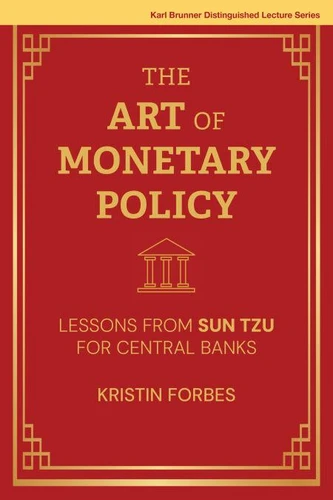
The Art of Monetary Policy. Lessons from Sun Tzu for Central Banks
Par :Formats :
Disponible dans votre compte client Decitre ou Furet du Nord dès validation de votre commande. Le format ePub protégé est :
- Compatible avec une lecture sur My Vivlio (smartphone, tablette, ordinateur)
- Compatible avec une lecture sur liseuses Vivlio
- Pour les liseuses autres que Vivlio, vous devez utiliser le logiciel Adobe Digital Edition. Non compatible avec la lecture sur les liseuses Kindle, Remarkable et Sony
- Non compatible avec un achat hors France métropolitaine
 , qui est-ce ?
Notre partenaire de plateforme de lecture numérique où vous retrouverez l'ensemble de vos ebooks gratuitement
Pour en savoir plus sur nos ebooks, consultez notre aide en ligne ici
C'est si simple ! Lisez votre ebook avec l'app Vivlio sur votre tablette, mobile ou ordinateur :

- Nombre de pages136
- FormatePub
- ISBN978-0-262-05235-1
- EAN9780262052351
- Date de parution21/04/2026
- Protection num.Adobe DRM
- Taille4 Mo
- Infos supplémentairesepub
- ÉditeurThe MIT Press
Résumé
Strategic lessons for monetary policy from the last two tumultuous decades based on insights from Sun Tzu, the Chinese philosopher and author of The Art of War. When central banks were forced to innovate and develop a multifaceted set of new weapons in response to the 2008 global financial crisis and 2020 COVID-19 pandemic, the result was a substantial expansion in their authority and reach. In The Art of Monetary Policy, Kristin Forbes draws lessons for monetary policy of the last two decades from the principles of Sun Tzu, the author of The Art of War, a Chinese philosopher and military strategist from the fifth century BC.
Tzu proposed several key principles for success-tenets that apply to monetary policy and the battlefield today: (1) plan in advance for the next battle; (2) accept and adapt to the inevitability of powerful, external shocks outside your control; (3) establish a strong tactical position; (4) develop a variety of weapons that can be combined for different maneuvers and situations; (5) maintain flexibility so that you can quickly modify your strategy; and (6) consider the longer-term costs when evaluating the trade-offs of different approaches.
These principles provide insights into what central banks did (and did not) do well over the last two decades, as well as how they should deploy interest rates, balance sheets, emergency support programs, forward guidance, and macroprudential tools in the future. While the optimal strategy in both war and monetary policy is more of an "art" than a science, adopting these principles can improve our ability to battle the next crisis and build more resilient economies during peaceful periods.
Tzu proposed several key principles for success-tenets that apply to monetary policy and the battlefield today: (1) plan in advance for the next battle; (2) accept and adapt to the inevitability of powerful, external shocks outside your control; (3) establish a strong tactical position; (4) develop a variety of weapons that can be combined for different maneuvers and situations; (5) maintain flexibility so that you can quickly modify your strategy; and (6) consider the longer-term costs when evaluating the trade-offs of different approaches.
These principles provide insights into what central banks did (and did not) do well over the last two decades, as well as how they should deploy interest rates, balance sheets, emergency support programs, forward guidance, and macroprudential tools in the future. While the optimal strategy in both war and monetary policy is more of an "art" than a science, adopting these principles can improve our ability to battle the next crisis and build more resilient economies during peaceful periods.