SOLDES
Jusqu'à -70% sur une sélection d'articles*

Nouveauté
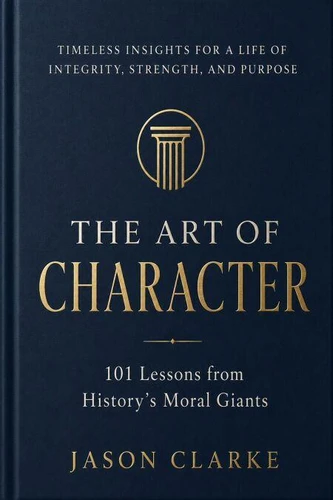
The Art of Character. 101 Lessons from History's Moral Giants
Par :Formats :
Disponible dans votre compte client Decitre ou Furet du Nord dès validation de votre commande. Le format ePub est :
- Compatible avec une lecture sur My Vivlio (smartphone, tablette, ordinateur)
- Compatible avec une lecture sur liseuses Vivlio
- Pour les liseuses autres que Vivlio, vous devez utiliser le logiciel Adobe Digital Edition. Non compatible avec la lecture sur les liseuses Kindle, Remarkable et Sony
 , qui est-ce ?
Notre partenaire de plateforme de lecture numérique où vous retrouverez l'ensemble de vos ebooks gratuitement
Pour en savoir plus sur nos ebooks, consultez notre aide en ligne ici
C'est si simple ! Lisez votre ebook avec l'app Vivlio sur votre tablette, mobile ou ordinateur :

- FormatePub
- ISBN8905164118
- EAN9798905164118
- Date de parution21/06/2026
- Protection num.pas de protection
- Taille727 Ko
- Infos supplémentairesepub
- ÉditeurChiify
Résumé
"Character is destiny." - Heraclitus "The time is always right to do what is right." - Martin Luther King Jr.
Most books tell you what good character looks like. This one shows you exactly how it is built - through the specific, verified, historically documented lives of people who built it under conditions that would have broken almost anyone else.
The Art of Character: 101 Lessons from History's Moral Giants is one of the most anticipated character development books of 2026 - a landmark work of moral philosophy for everyday life that is already generating conversation among readers of Stoicism, virtue ethics, personal integrity books, and serious self-improvement literature worldwide.
Across twelve richly written chapters and 101 carefully crafted lessons, this book examines eleven foundational virtues - honesty, courage, integrity, compassion, justice, humility, perseverance, generosity, moral courage under pressure, and forgiveness - through the lives of the people who demonstrated each one at its most complete and most costly.
Abraham Lincoln, who practiced honesty at genuine political cost before the world knew his name.
Harriet Tubman, who crossed back into slavery thirteen times after securing her own freedom because her character would not allow her to stop. Nelson Mandela, who spent twenty-seven years in prison developing the forgiveness and the equanimity that would eventually make a peaceful transition possible. Frederick Douglass, who taught himself to read in secret and built, from the most disadvantaged starting point imaginable, one of the most powerful moral voices in American history.
Simone Weil, who voluntarily shared the suffering of factory workers and the French resistance because her philosophy required it. Desmond Tutu, who maintained a daily prayer practice across decades of engagement with the worst that human beings are capable of doing to each other because he understood that the interior life is the source of the outer practice. This is the book for you if: You have read books on how to be a better person and found them too shallow for the questions you are actually asking.
You are drawn to Stoicism and virtue ethics but want a wider philosophical conversation that includes Confucian, Buddhist, African, and existentialist traditions alongside the Greek and Roman ones. You are interested in leadership character books but want the kind of moral depth that most leadership literature avoids. You sense that the self-improvement genre has been offering techniques when what you actually need is a framework - a coherent, philosophically grounded, historically tested understanding of what genuine character is, where it comes from, and what building it actually requires. You want a book about ethical living that reads like great literature, thinks like serious scholarship, and lands like a conversation with someone who has genuinely wrestled with the questions that matter most. What this book covers: Chapter by chapter, The Art of Character builds a complete architecture of moral development - beginning with the anatomy of character itself and moving through honesty, courage, integrity, compassion, justice, humility, perseverance, generosity, moral courage under pressure, and forgiveness, arriving finally at the integration that makes all of them genuinely one's own rather than a collection of admired ideals. Every lesson is grounded in verified historical thought and documented human life.
Every chapter connects moral philosophy to the specific texture of ordinary contemporary experience.
Harriet Tubman, who crossed back into slavery thirteen times after securing her own freedom because her character would not allow her to stop. Nelson Mandela, who spent twenty-seven years in prison developing the forgiveness and the equanimity that would eventually make a peaceful transition possible. Frederick Douglass, who taught himself to read in secret and built, from the most disadvantaged starting point imaginable, one of the most powerful moral voices in American history.
Simone Weil, who voluntarily shared the suffering of factory workers and the French resistance because her philosophy required it. Desmond Tutu, who maintained a daily prayer practice across decades of engagement with the worst that human beings are capable of doing to each other because he understood that the interior life is the source of the outer practice. This is the book for you if: You have read books on how to be a better person and found them too shallow for the questions you are actually asking.
You are drawn to Stoicism and virtue ethics but want a wider philosophical conversation that includes Confucian, Buddhist, African, and existentialist traditions alongside the Greek and Roman ones. You are interested in leadership character books but want the kind of moral depth that most leadership literature avoids. You sense that the self-improvement genre has been offering techniques when what you actually need is a framework - a coherent, philosophically grounded, historically tested understanding of what genuine character is, where it comes from, and what building it actually requires. You want a book about ethical living that reads like great literature, thinks like serious scholarship, and lands like a conversation with someone who has genuinely wrestled with the questions that matter most. What this book covers: Chapter by chapter, The Art of Character builds a complete architecture of moral development - beginning with the anatomy of character itself and moving through honesty, courage, integrity, compassion, justice, humility, perseverance, generosity, moral courage under pressure, and forgiveness, arriving finally at the integration that makes all of them genuinely one's own rather than a collection of admired ideals. Every lesson is grounded in verified historical thought and documented human life.
Every chapter connects moral philosophy to the specific texture of ordinary contemporary experience.