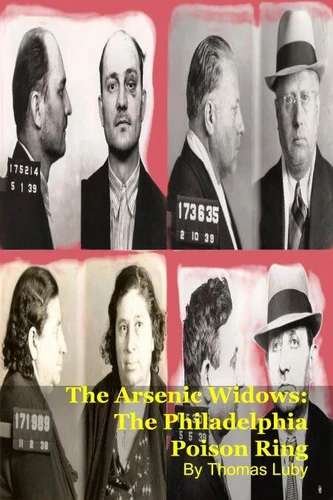
The Arsenic Widows: The Philadelphia Poison RingBetween 1931 and 1941, a criminal conspiracy operating in the Italian immigrant community of South Philadelphia murdered as many as one hundred people for insurance money. The architects of this enterprise, tailor Paul Petrillo, enforcer Herman Petrillo, and mystic healer Morris Bolber, built a sophisticated organisation that exploited the structural vulnerabilities of Depression-era America: no-examination insurance policies, a corrupted death certification system, and the systematic institutional indifference of a city that had decided the immigrant poor were not worth watching carefully.
The Arsenic Widows reconstructs this forgotten chapter of American criminal history with the full weight of scholarly analysis and narrative power it deserves. Drawing on trial records, forensic evidence, and the rich social history of Italian immigrant life, it examines not only the mechanics of the ring's operation but the deeper structural failures that made it possible, and the community that lived, suffered, and fell silent in its wake.
This is a story about poisoned soup and corrupted physicians, about folk magic and industrial insurance fraud, about the specific human cost of institutional indifference. It is also a story about the hundred ordinary people who died in ordinary houses on ordinary streets, and who have been forgotten for too long.
The Arsenic Widows: The Philadelphia Poison RingBetween 1931 and 1941, a criminal conspiracy operating in the Italian immigrant community of South Philadelphia murdered as many as one hundred people for insurance money. The architects of this enterprise, tailor Paul Petrillo, enforcer Herman Petrillo, and mystic healer Morris Bolber, built a sophisticated organisation that exploited the structural vulnerabilities of Depression-era America: no-examination insurance policies, a corrupted death certification system, and the systematic institutional indifference of a city that had decided the immigrant poor were not worth watching carefully.
The Arsenic Widows reconstructs this forgotten chapter of American criminal history with the full weight of scholarly analysis and narrative power it deserves. Drawing on trial records, forensic evidence, and the rich social history of Italian immigrant life, it examines not only the mechanics of the ring's operation but the deeper structural failures that made it possible, and the community that lived, suffered, and fell silent in its wake.
This is a story about poisoned soup and corrupted physicians, about folk magic and industrial insurance fraud, about the specific human cost of institutional indifference. It is also a story about the hundred ordinary people who died in ordinary houses on ordinary streets, and who have been forgotten for too long.

 , qui est-ce ?
