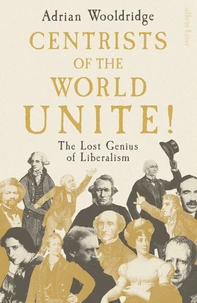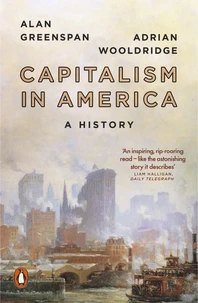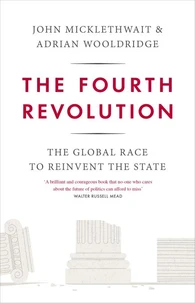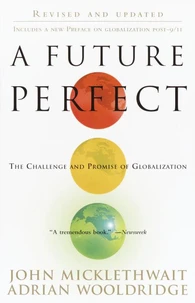
Adrian Wooldridge is the global business columnist at Bloomberg Opinion. Previously, he worked for the Economist for thirty-two years, including stints as its Lexington, Schumpeter and Bagehot columnist. He earned a doctorate in history from Oxford University, where he was a Fellow of All Souls College. He is the author of ten previous books, including Capitalism in America co-written with Alan Greenspan and seven co-written with John Micklethwait: The Wake-Up Call, The Witch Doctors, A Future Perfect, The Company, The Right Nation, God is Back and The Fourth Revolution.
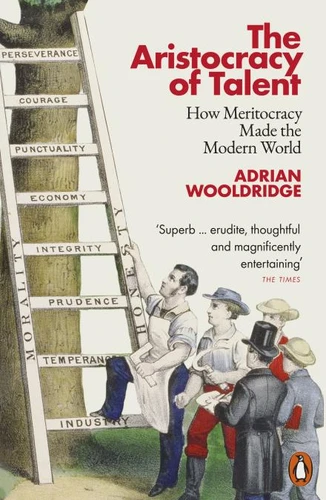
The Aristocracy of Talent. How Meritocracy Made the Modern World
Par :Formats :
Disponible dans votre compte client Decitre ou Furet du Nord dès validation de votre commande. Le format ePub protégé est :
- Compatible avec une lecture sur My Vivlio (smartphone, tablette, ordinateur)
- Compatible avec une lecture sur liseuses Vivlio
- Pour les liseuses autres que Vivlio, vous devez utiliser le logiciel Adobe Digital Edition. Non compatible avec la lecture sur les liseuses Kindle, Remarkable et Sony
- Non compatible avec un achat hors France métropolitaine
 , qui est-ce ?
Notre partenaire de plateforme de lecture numérique où vous retrouverez l'ensemble de vos ebooks gratuitement
Pour en savoir plus sur nos ebooks, consultez notre aide en ligne ici
C'est si simple ! Lisez votre ebook avec l'app Vivlio sur votre tablette, mobile ou ordinateur :

- Nombre de pages496
- FormatePub
- ISBN978-0-241-39150-1
- EAN9780241391501
- Date de parution03/06/2021
- Protection num.Adobe DRM
- Infos supplémentairesepub
- ÉditeurPENGUIN
Résumé
THE TIMES BOOK OF THE YEAR*Shortlisted for the 2021 Financial Times and McKinsey & Company Business Book of the Year Award*'This unique and fascinating history explains why the blame now being piled upon meritocracy for many social ills is misplaced-and that assigning responsibilities to the people best able to discharge them really is better than the time-honoured customs of corruption, patronage, nepotism and hereditary castes' Steven PinkerMeritocracy: the idea that people should be advanced according to their talents rather than their status at birth.
For much of history this was a revolutionary thought, but by the end of the twentieth century it had become the world's ruling ideology. How did this happen, and why is meritocracy now under attack from both right and left?Adrian Wooldridge traces the history of meritocracy forged by the politicians and officials who introduced the revolutionary principle of open competition, the psychologists who devised methods for measuring natural mental abilities and the educationalists who built ladders of educational opportunity.
He looks outside western cultures and shows what transformative effects it has had everywhere it has been adopted, especially once women were brought into the meritocractic system. Wooldridge also shows how meritocracy has now become corrupted and argues that the recent stalling of social mobility is the result of failure to complete the meritocratic revolution. Rather than abandoning meritocracy, he says, we should call for its renewal.
For much of history this was a revolutionary thought, but by the end of the twentieth century it had become the world's ruling ideology. How did this happen, and why is meritocracy now under attack from both right and left?Adrian Wooldridge traces the history of meritocracy forged by the politicians and officials who introduced the revolutionary principle of open competition, the psychologists who devised methods for measuring natural mental abilities and the educationalists who built ladders of educational opportunity.
He looks outside western cultures and shows what transformative effects it has had everywhere it has been adopted, especially once women were brought into the meritocractic system. Wooldridge also shows how meritocracy has now become corrupted and argues that the recent stalling of social mobility is the result of failure to complete the meritocratic revolution. Rather than abandoning meritocracy, he says, we should call for its renewal.