SOLDES
Jusqu'à -70% sur une sélection d'articles*

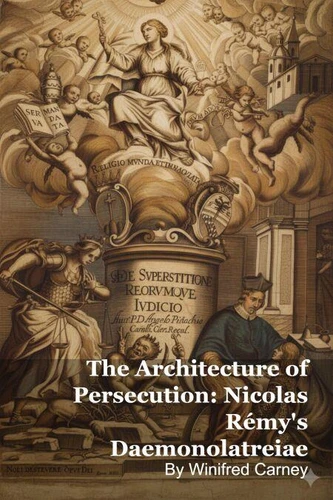
The Architecture of Persecution: Nicolas Rémy's Daemonolatreiae
Par :Formats :
Disponible dans votre compte client Decitre ou Furet du Nord dès validation de votre commande. Le format ePub est :
- Compatible avec une lecture sur My Vivlio (smartphone, tablette, ordinateur)
- Compatible avec une lecture sur liseuses Vivlio
- Pour les liseuses autres que Vivlio, vous devez utiliser le logiciel Adobe Digital Edition. Non compatible avec la lecture sur les liseuses Kindle, Remarkable et Sony
 , qui est-ce ?
Notre partenaire de plateforme de lecture numérique où vous retrouverez l'ensemble de vos ebooks gratuitement
Pour en savoir plus sur nos ebooks, consultez notre aide en ligne ici
C'est si simple ! Lisez votre ebook avec l'app Vivlio sur votre tablette, mobile ou ordinateur :

- FormatePub
- ISBN8232159726
- EAN9798232159726
- Date de parution27/11/2025
- Protection num.pas de protection
- Infos supplémentairesepub
- ÉditeurDraft2Digital
Résumé
The Architecture of Persecution: Nicolas Rémy's Daemonolatreiae This comprehensive study examines Nicolas Rémy's Daemonolatreiae Libri Tres (1595), one of early modern Europe's most systematic documentations of judicial violence. Rémy, Procureur-General of Lorraine, boasted of prosecuting 800-900 people for witchcraft between 1581-1606, producing a treatise that functioned as operational manual for persecution.
Through detailed analysis of the text, its historical context, and its mechanisms, this work reveals how learned individuals operating through proper legal procedures with absolute conviction can produce catastrophic injustice. The study integrates multiple analytical frameworks-historical analysis, gender studies, legal history, psychology, epistemology, and comparative analysis-to examine how systematic persecution operates.
It explores the cognitive mechanisms enabling mass violence, the bureaucratization of atrocity, how legal procedures legitimate killing, and the epistemology of authoritarian systems that transform uncertainty into weaponized threat. The work demonstrates that Rémy's prosecutions overwhelmingly targeted vulnerable women, operated through torture producing false confessions, and exemplified patterns of scapegoating and enemy construction visible throughout history.
By examining witch-trials as blueprint for institutional violence rather than as mere historical curiosity, the study draws essential lessons for recognizing and resisting similar patterns in modern contexts. It insists that historical memory constitutes ethical obligation-to honor victims, understand perpetration, and prevent recurrence of systematic persecution that continues to threaten vulnerable populations.
Through detailed analysis of the text, its historical context, and its mechanisms, this work reveals how learned individuals operating through proper legal procedures with absolute conviction can produce catastrophic injustice. The study integrates multiple analytical frameworks-historical analysis, gender studies, legal history, psychology, epistemology, and comparative analysis-to examine how systematic persecution operates.
It explores the cognitive mechanisms enabling mass violence, the bureaucratization of atrocity, how legal procedures legitimate killing, and the epistemology of authoritarian systems that transform uncertainty into weaponized threat. The work demonstrates that Rémy's prosecutions overwhelmingly targeted vulnerable women, operated through torture producing false confessions, and exemplified patterns of scapegoating and enemy construction visible throughout history.
By examining witch-trials as blueprint for institutional violence rather than as mere historical curiosity, the study draws essential lessons for recognizing and resisting similar patterns in modern contexts. It insists that historical memory constitutes ethical obligation-to honor victims, understand perpetration, and prevent recurrence of systematic persecution that continues to threaten vulnerable populations.