SOLDES
Jusqu'à -70% sur une sélection d'articles*

Nouveauté
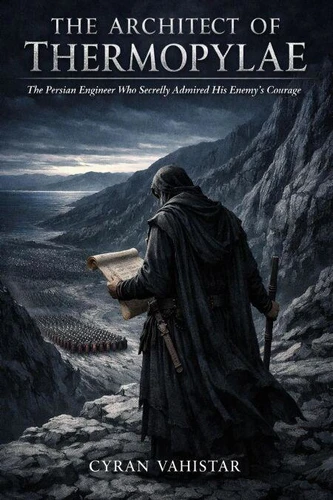
The Architect of Thermopylae: The Persian Engineer Who Secretly Admired His Enemy's Courage
Par :Formats :
Disponible dans votre compte client Decitre ou Furet du Nord dès validation de votre commande. Le format ePub est :
- Compatible avec une lecture sur My Vivlio (smartphone, tablette, ordinateur)
- Compatible avec une lecture sur liseuses Vivlio
- Pour les liseuses autres que Vivlio, vous devez utiliser le logiciel Adobe Digital Edition. Non compatible avec la lecture sur les liseuses Kindle, Remarkable et Sony
 , qui est-ce ?
Notre partenaire de plateforme de lecture numérique où vous retrouverez l'ensemble de vos ebooks gratuitement
Pour en savoir plus sur nos ebooks, consultez notre aide en ligne ici
C'est si simple ! Lisez votre ebook avec l'app Vivlio sur votre tablette, mobile ou ordinateur :

- FormatePub
- ISBN8233050916
- EAN9798233050916
- Date de parution30/05/2026
- Protection num.pas de protection
- Infos supplémentairesepub
- ÉditeurLinda Balsamo
Résumé
Every man at Thermopylae was there to fight. Kambujiya of Persepolis was there to measure. He is the Chief Engineer of Xerxes' western expedition, the man who bridged the Hellespont with 314 boats and cut a two-kilometre canal through solid rock to spare the Persian fleet a dangerous cape. He has spent twenty years solving the physical problems of empire, and now the largest army ever assembled has stopped in front of fifteen feet of Greek limestone and will not move.
His engineering assessment said this would happen. He submitted it before the first assault. He stood on the ridge and watched his recommendation be ignored. For three days, Kambujiya observes the Battle of Thermopylae from the position that no historian has written about: the Persian engineering observation post, where the man responsible for assault approach analysis watches three hundred Spartans and seven hundred Thespians hold the Hot Gates against two hundred and fifty thousand soldiers.
He measures the width of the pass. He calculates the rotation system that multiplies the Greek force's effective strength. He identifies the mountain path that will end the battle. He briefs the Immortals for the night march. And in the evenings, in the personal section of his engineering log that no one else reads, he writes what the professional notation cannot contain: that he does not know what these men are made of, but he has never seen its equivalent.
This is not a novel about the glory of Thermopylae. It is a novel about what the glory looked like from the other side of the spear, from the perspective of the most technically sophisticated observer on the Persian side, a man whose engineering method required him to understand exactly what he was witnessing and whose twenty years of professional honesty would not permit him to pretend he was witnessing something smaller than it was.
He identified the Anopaea path. He wrote the timing calculation that made the Immortals' night march possible. He contributed, more directly than almost anyone in the Persian command, to the end of the Greek stand at the Hot Gates. He also wrote, in the margins of a professional document, the most honest assessment of courage he had ever produced, and spent the rest of his life trying to ensure that his own work deserved to be in proximity to it.
The pass was fifteen feet wide. Three hundred men held it. One engineer understood exactly what that meant.
His engineering assessment said this would happen. He submitted it before the first assault. He stood on the ridge and watched his recommendation be ignored. For three days, Kambujiya observes the Battle of Thermopylae from the position that no historian has written about: the Persian engineering observation post, where the man responsible for assault approach analysis watches three hundred Spartans and seven hundred Thespians hold the Hot Gates against two hundred and fifty thousand soldiers.
He measures the width of the pass. He calculates the rotation system that multiplies the Greek force's effective strength. He identifies the mountain path that will end the battle. He briefs the Immortals for the night march. And in the evenings, in the personal section of his engineering log that no one else reads, he writes what the professional notation cannot contain: that he does not know what these men are made of, but he has never seen its equivalent.
This is not a novel about the glory of Thermopylae. It is a novel about what the glory looked like from the other side of the spear, from the perspective of the most technically sophisticated observer on the Persian side, a man whose engineering method required him to understand exactly what he was witnessing and whose twenty years of professional honesty would not permit him to pretend he was witnessing something smaller than it was.
He identified the Anopaea path. He wrote the timing calculation that made the Immortals' night march possible. He contributed, more directly than almost anyone in the Persian command, to the end of the Greek stand at the Hot Gates. He also wrote, in the margins of a professional document, the most honest assessment of courage he had ever produced, and spent the rest of his life trying to ensure that his own work deserved to be in proximity to it.
The pass was fifteen feet wide. Three hundred men held it. One engineer understood exactly what that meant.