SOLDES
Jusqu'à -70% sur une sélection d'articles*

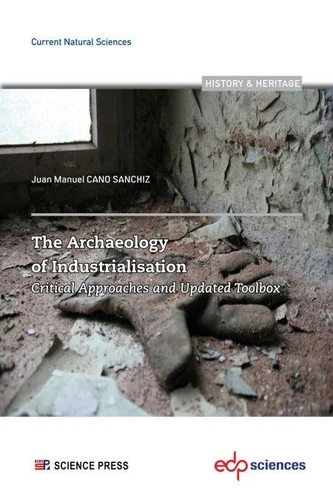
The Archaeology of Industrialisation. Critical Approaches and Updated Toolbox
Par :Formats :
Disponible dans votre compte client Decitre ou Furet du Nord dès validation de votre commande. Le format PDF est :
- Compatible avec une lecture sur My Vivlio (smartphone, tablette, ordinateur)
- Compatible avec une lecture sur liseuses Vivlio
- Pour les liseuses autres que Vivlio, vous devez utiliser le logiciel Adobe Digital Edition. Non compatible avec la lecture sur les liseuses Kindle, Remarkable et Sony
 , qui est-ce ?
Notre partenaire de plateforme de lecture numérique où vous retrouverez l'ensemble de vos ebooks gratuitement
Pour en savoir plus sur nos ebooks, consultez notre aide en ligne ici
C'est si simple ! Lisez votre ebook avec l'app Vivlio sur votre tablette, mobile ou ordinateur :

- Nombre de pages280
- FormatPDF
- ISBN978-2-7598-3895-0
- EAN9782759838950
- Date de parution06/02/2026
- Protection num.pas de protection
- Taille5 Mo
- Infos supplémentairespdf
- ÉditeurEDP Sciences
Résumé
This book offers a critical view of the archaeology of industrialisation, which is presented as one of the different practices coexisting within a broader industrial archaeology.
The main ideas, research frameworks, sources of information, and tools for recording, analysing and explaining industrial sites are examined. The archaeology of industrialisation is defined as the study of the industrial period through its material remains.
The industrialised society is not understood as an isolated nor as a homogeneous group, but as a complex social system of global dispersion and impacts. Thus, it is argued that the archaeology of industrialisation is an archaeology of the Contemporary Age focused on the industrial production, distribution and consumption of things. Some space is dedicated to theorising about industrial heritage, which is approached as a related topic through a critical and archaeological lens.
The ideas presented are illustrated with examples from Spain, Brazil and the People's Republic of China. These cases help us rethink industrial archaeology and heritage from the Global South while observing alternative industrialization processes and industrial societies.
The industrialised society is not understood as an isolated nor as a homogeneous group, but as a complex social system of global dispersion and impacts. Thus, it is argued that the archaeology of industrialisation is an archaeology of the Contemporary Age focused on the industrial production, distribution and consumption of things. Some space is dedicated to theorising about industrial heritage, which is approached as a related topic through a critical and archaeological lens.
The ideas presented are illustrated with examples from Spain, Brazil and the People's Republic of China. These cases help us rethink industrial archaeology and heritage from the Global South while observing alternative industrialization processes and industrial societies.