
Nouveauté
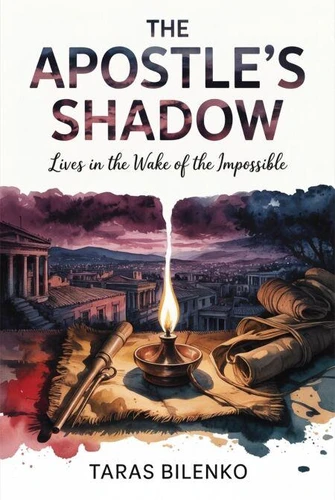
The Apostle's Shadow. Lives in the Wake of the Impossible
Par :Formats :
Disponible dans votre compte client Decitre ou Furet du Nord dès validation de votre commande. Le format ePub est :
- Compatible avec une lecture sur My Vivlio (smartphone, tablette, ordinateur)
- Compatible avec une lecture sur liseuses Vivlio
- Pour les liseuses autres que Vivlio, vous devez utiliser le logiciel Adobe Digital Edition. Non compatible avec la lecture sur les liseuses Kindle, Remarkable et Sony
 , qui est-ce ?
Notre partenaire de plateforme de lecture numérique où vous retrouverez l'ensemble de vos ebooks gratuitement
Pour en savoir plus sur nos ebooks, consultez notre aide en ligne ici
C'est si simple ! Lisez votre ebook avec l'app Vivlio sur votre tablette, mobile ou ordinateur :

- Nombre de pages168
- FormatePub
- ISBN978-3-565-57747-7
- EAN9783565577477
- Date de parution22/07/2026
- Protection num.pas de protection
- Taille782 Ko
- Infos supplémentairesepub
- ÉditeurEmphaloz Publishing House
Résumé
What does it mean to live in the wake of something that changed the world - not as a hero, not as a witness, but as an ordinary person trying to pay a debt, finish a seam, and keep the rain out of the roof?
*The Apostle's Shadow* by Taras Bilenko is a quietly extraordinary work of historical fiction, tracing the lives of men and women who encountered Paul of Tarsus during his journeys across the ancient Mediterranean - and were never the same again.
But this is not a novel about miracles or theology. It is a novel about aftermath: about what it costs, in very practical terms, to be touched by an idea larger than your own survival. At its heart is Miriam, a widowed tentmaker in first-century Corinth, counting strips of leather and dreading a creditor's visit, when a small, weathered stranger knocks at her courtyard gate before dawn. What follows is a masterfully observed portrayal of daily life in the ancient world - its smells, its textures, its economic precariousness - rendered with the kind of sensory precision that makes history feel inhabited rather than reconstructed.
Bilenko writes workshop scenes with the authority of someone who understands not just how awnings were stitched, but why the double-waxed thread mattered and what it meant to keep that knowledge to yourself. Yet the novel's true subject is quieter and more searching: how people process the impossible on their own terms. The characters here are not converts in the conventional sense. They are skeptics, pragmatists, and survivors, measuring extraordinary claims against the weight of their own losses and obligations.
Their encounters with Paul are rendered without sentimentality - he appears as a complicated, driven, sometimes maddening human presence, and the novel resists every temptation to make him larger than life.
But this is not a novel about miracles or theology. It is a novel about aftermath: about what it costs, in very practical terms, to be touched by an idea larger than your own survival. At its heart is Miriam, a widowed tentmaker in first-century Corinth, counting strips of leather and dreading a creditor's visit, when a small, weathered stranger knocks at her courtyard gate before dawn. What follows is a masterfully observed portrayal of daily life in the ancient world - its smells, its textures, its economic precariousness - rendered with the kind of sensory precision that makes history feel inhabited rather than reconstructed.
Bilenko writes workshop scenes with the authority of someone who understands not just how awnings were stitched, but why the double-waxed thread mattered and what it meant to keep that knowledge to yourself. Yet the novel's true subject is quieter and more searching: how people process the impossible on their own terms. The characters here are not converts in the conventional sense. They are skeptics, pragmatists, and survivors, measuring extraordinary claims against the weight of their own losses and obligations.
Their encounters with Paul are rendered without sentimentality - he appears as a complicated, driven, sometimes maddening human presence, and the novel resists every temptation to make him larger than life.