SOLDES
Jusqu'à -70% sur une sélection d'articles*

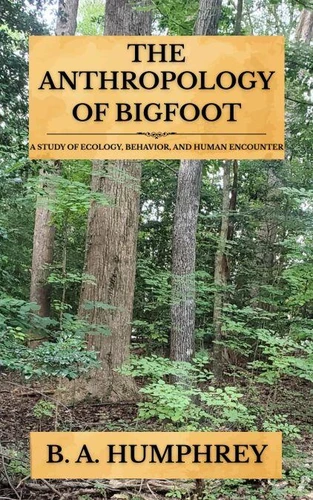
The Anthropology Of Bigfoot
Par :Formats :
Disponible dans votre compte client Decitre ou Furet du Nord dès validation de votre commande. Le format ePub est :
- Compatible avec une lecture sur My Vivlio (smartphone, tablette, ordinateur)
- Compatible avec une lecture sur liseuses Vivlio
- Pour les liseuses autres que Vivlio, vous devez utiliser le logiciel Adobe Digital Edition. Non compatible avec la lecture sur les liseuses Kindle, Remarkable et Sony
 , qui est-ce ?
Notre partenaire de plateforme de lecture numérique où vous retrouverez l'ensemble de vos ebooks gratuitement
Pour en savoir plus sur nos ebooks, consultez notre aide en ligne ici
C'est si simple ! Lisez votre ebook avec l'app Vivlio sur votre tablette, mobile ou ordinateur :

- FormatePub
- ISBN8233986864
- EAN9798233986864
- Date de parution22/01/2026
- Protection num.pas de protection
- Infos supplémentairesepub
- ÉditeurLinda Balsamo
Résumé
What if Bigfoot is not a zoological mystery, but an anthropological one?For more than a century, reports of large, upright, human-like figures have emerged from forests across the world. They appear briefly, avoid contact, leave little evidence, and vanish before certainty can form. Popular culture has treated these accounts as entertainment, folklore, or hoax. Science has largely dismissed them for lack of proof.
The Anthropology of Bigfoot takes a different approach. Rather than asking whether Bigfoot can be proven, this book asks whether the question itself has been misunderstood. Drawing on anthropology, ecology, human perception, and behavioral patterning, it examines how a large, reclusive, intelligent hominin could plausibly exist without leaving the kinds of evidence modern science expects to find. It explores forests as erasing environments, avoidance as an adaptive strategy, stillness as camouflage, and absence as meaningful data rather than failure.
The book also turns its lens toward the human side of the phenomenon. Witnesses, fear responses, silence, cultural patterns, and global parallels are examined not as proof, but as signals that something about these encounters resists simple explanation. Across continents and cultures, similar forms appear under similar conditions, raising questions that dismissal alone cannot answer. Written in a clear, flowing narrative style, The Anthropology of Bigfoot is not an argument for belief and not a debunking exercise.
It is a disciplined inquiry into why this question persists, why it matters, and what it reveals about the limits of knowledge in a world that believes it has mapped everything.
The Anthropology of Bigfoot takes a different approach. Rather than asking whether Bigfoot can be proven, this book asks whether the question itself has been misunderstood. Drawing on anthropology, ecology, human perception, and behavioral patterning, it examines how a large, reclusive, intelligent hominin could plausibly exist without leaving the kinds of evidence modern science expects to find. It explores forests as erasing environments, avoidance as an adaptive strategy, stillness as camouflage, and absence as meaningful data rather than failure.
The book also turns its lens toward the human side of the phenomenon. Witnesses, fear responses, silence, cultural patterns, and global parallels are examined not as proof, but as signals that something about these encounters resists simple explanation. Across continents and cultures, similar forms appear under similar conditions, raising questions that dismissal alone cannot answer. Written in a clear, flowing narrative style, The Anthropology of Bigfoot is not an argument for belief and not a debunking exercise.
It is a disciplined inquiry into why this question persists, why it matters, and what it reveals about the limits of knowledge in a world that believes it has mapped everything.