SOLDES
Jusqu'à -70% sur une sélection d'articles*

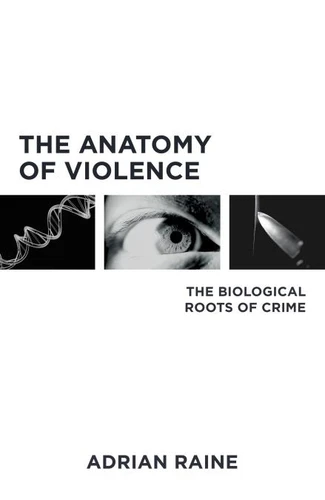
The Anatomy of Violence. The Biological Roots of Crime
Par :Formats :
Disponible dans votre compte client Decitre ou Furet du Nord dès validation de votre commande. Le format ePub protégé est :
- Compatible avec une lecture sur My Vivlio (smartphone, tablette, ordinateur)
- Compatible avec une lecture sur liseuses Vivlio
- Pour les liseuses autres que Vivlio, vous devez utiliser le logiciel Adobe Digital Edition. Non compatible avec la lecture sur les liseuses Kindle, Remarkable et Sony
- Non compatible avec un achat hors France métropolitaine
 , qui est-ce ?
Notre partenaire de plateforme de lecture numérique où vous retrouverez l'ensemble de vos ebooks gratuitement
Pour en savoir plus sur nos ebooks, consultez notre aide en ligne ici
C'est si simple ! Lisez votre ebook avec l'app Vivlio sur votre tablette, mobile ou ordinateur :

- Nombre de pages544
- FormatePub
- ISBN978-0-14-194613-9
- EAN9780141946139
- Date de parution30/04/2013
- Protection num.Adobe DRM
- Infos supplémentairesepub
- ÉditeurPENGUIN
Résumé
Adrian Raine is one of the world's leading authorities on the minds of the violent, the criminal, the dangerous, the unstable. An Anatomy of Violence is the culmination of his life's work so far, offering the latest answers to some of the most difficult questions: what are the causes of violence? Can it be treated? And might it one day be stopped?Are some criminals born, not made? What causes violence and how can we treat it? An Anatomy of Violence introduces readers to new ways of looking at these age-old questions.
Drawing on the latest scientific research, Adrian Raine explains what it reveals about the brains of murderers, psychopaths and serial killers. While once it was thought upbringing explained all, and subsequently explanations shifted to genetics, Raine goes to great pains to explain that anti-social behaviour is complex, and based on the interaction between genetics and the biological and social environment in which a person is raised.
But the latest statistical evidence between certain types of biological and early behavioural warning signs is also very strong. Through a series of case studies of famous criminals, Raine shows how their criminal behaviour might be explained on the basis of these new scientific discoveries. But the conclusions point to a host of philosophical and moral issues. What are the implications for our criminal justice system? Should we condemn and punish individuals who have little or no control over their behaviour? Should we act preemptively with people who exhibit strong biological predispositions to becoming dangerous criminals? These are among the thorny issues we can no longer ignore as our understanding of criminal behaviour grows.
Praise for Adrian Raine's The Psychopathology of Crime: 'An extremely informative, thoughtful and illuminating book ... a tour de force', David P Farrington, Psychological Medicine Adrian Raine is the Richard Perry University Professor in the Departments of Criminology, Psychiatry, and Psychology at the University of Pennsylvania. For the past 35 years, his research has focused on the neurobiological and biosocial bases of antisocial and violent behavior, and ways to both prevent and treat it in both children and adults.
Drawing on the latest scientific research, Adrian Raine explains what it reveals about the brains of murderers, psychopaths and serial killers. While once it was thought upbringing explained all, and subsequently explanations shifted to genetics, Raine goes to great pains to explain that anti-social behaviour is complex, and based on the interaction between genetics and the biological and social environment in which a person is raised.
But the latest statistical evidence between certain types of biological and early behavioural warning signs is also very strong. Through a series of case studies of famous criminals, Raine shows how their criminal behaviour might be explained on the basis of these new scientific discoveries. But the conclusions point to a host of philosophical and moral issues. What are the implications for our criminal justice system? Should we condemn and punish individuals who have little or no control over their behaviour? Should we act preemptively with people who exhibit strong biological predispositions to becoming dangerous criminals? These are among the thorny issues we can no longer ignore as our understanding of criminal behaviour grows.
Praise for Adrian Raine's The Psychopathology of Crime: 'An extremely informative, thoughtful and illuminating book ... a tour de force', David P Farrington, Psychological Medicine Adrian Raine is the Richard Perry University Professor in the Departments of Criminology, Psychiatry, and Psychology at the University of Pennsylvania. For the past 35 years, his research has focused on the neurobiological and biosocial bases of antisocial and violent behavior, and ways to both prevent and treat it in both children and adults.