SOLDES
Jusqu'à -70% sur une sélection d'articles*

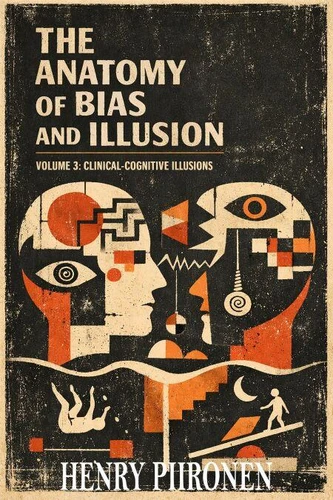
The Anatomy of Bias and Illusion, Volume 3: Clinical-Cognitive Illusions. The Anatomy of Bias and Illusion, #3
Par :Formats :
Disponible dans votre compte client Decitre ou Furet du Nord dès validation de votre commande. Le format ePub est :
- Compatible avec une lecture sur My Vivlio (smartphone, tablette, ordinateur)
- Compatible avec une lecture sur liseuses Vivlio
- Pour les liseuses autres que Vivlio, vous devez utiliser le logiciel Adobe Digital Edition. Non compatible avec la lecture sur les liseuses Kindle, Remarkable et Sony
 , qui est-ce ?
Notre partenaire de plateforme de lecture numérique où vous retrouverez l'ensemble de vos ebooks gratuitement
Pour en savoir plus sur nos ebooks, consultez notre aide en ligne ici
C'est si simple ! Lisez votre ebook avec l'app Vivlio sur votre tablette, mobile ou ordinateur :

- FormatePub
- ISBN8233112812
- EAN9798233112812
- Date de parution27/02/2026
- Protection num.pas de protection
- Infos supplémentairesepub
- ÉditeurLinda Balsamo
Résumé
What happens when ordinary cognitive distortions intensify, solidify, and begin to structure lived reality?Volume 3: Clinical-Cognitive Illusions examines the patterns of thought that underlie anxiety, depression, executive dysfunction, psychosis, bipolar disorder, paranoia, obsessive-compulsive disorder, trauma, somatic symptom conditions, eating disorders, substance use, personality disorders, and suicidal ideation.
Across seventeen chapters, it maps the recurrent distortions that amplify fear, narrow time horizons, reshape identity, misattribute agency, and fuse imagination with perception. This volume does not pathologize individuals. Instead, it identifies the cognitive architectures that become rigid, recursive, and self-reinforcing under psychological strain. Threat magnification, hopelessness loops, grandiosity surges, compulsive certainty-seeking, persecutory patterning, memory fragmentation, temporal distortion, and self-concept instability are analyzed as structured illusion systems rather than isolated symptoms.
From trauma-related memory distortions to mood-congruent perception, from ritualized safety behaviors to reality-monitoring failures, this book presents a systematic taxonomy of how the mind can construct internally coherent worlds that drift from shared reality, exploring them through first person, cognitive order, bias or illusion forming phenomenological stanzas.. Clinical in scope and analytical in tone, Volume 3 expands the project of The Anatomy of Bias and Illusion into the domain where cognition, emotion, and identity converge under pressure, revealing how illusion can become lived experience.
Across seventeen chapters, it maps the recurrent distortions that amplify fear, narrow time horizons, reshape identity, misattribute agency, and fuse imagination with perception. This volume does not pathologize individuals. Instead, it identifies the cognitive architectures that become rigid, recursive, and self-reinforcing under psychological strain. Threat magnification, hopelessness loops, grandiosity surges, compulsive certainty-seeking, persecutory patterning, memory fragmentation, temporal distortion, and self-concept instability are analyzed as structured illusion systems rather than isolated symptoms.
From trauma-related memory distortions to mood-congruent perception, from ritualized safety behaviors to reality-monitoring failures, this book presents a systematic taxonomy of how the mind can construct internally coherent worlds that drift from shared reality, exploring them through first person, cognitive order, bias or illusion forming phenomenological stanzas.. Clinical in scope and analytical in tone, Volume 3 expands the project of The Anatomy of Bias and Illusion into the domain where cognition, emotion, and identity converge under pressure, revealing how illusion can become lived experience.