SOLDES
Jusqu'à -70% sur une sélection d'articles*

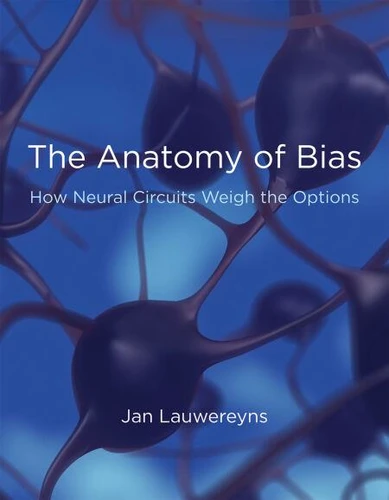
The Anatomy of Bias. How Neural Circuits Weigh the Options
Par :Formats :
Disponible dans votre compte client Decitre ou Furet du Nord dès validation de votre commande. Le format ePub protégé est :
- Compatible avec une lecture sur My Vivlio (smartphone, tablette, ordinateur)
- Compatible avec une lecture sur liseuses Vivlio
- Pour les liseuses autres que Vivlio, vous devez utiliser le logiciel Adobe Digital Edition. Non compatible avec la lecture sur les liseuses Kindle, Remarkable et Sony
- Non compatible avec un achat hors France métropolitaine
 , qui est-ce ?
Notre partenaire de plateforme de lecture numérique où vous retrouverez l'ensemble de vos ebooks gratuitement
Pour en savoir plus sur nos ebooks, consultez notre aide en ligne ici
C'est si simple ! Lisez votre ebook avec l'app Vivlio sur votre tablette, mobile ou ordinateur :

- Nombre de pages288
- FormatePub
- ISBN978-0-262-29160-6
- EAN9780262291606
- Date de parution19/08/2011
- Protection num.Adobe DRM
- Taille2 Mo
- Infos supplémentairesepub
- ÉditeurThe MIT Press
Résumé
An integrative account of the neural underpinnings of decision making, emphasizing the ways in which some information sources are given more weight than others. I will recklessly endeavor to scavenge materials from these various fields with the single aim of producing a coherent, but open-minded account of attention, or bias versus sensitivity, or how the activities of neurons allow us to decide one way or another that, with a faint echo of Hamlet in the background, something appears to be or not to be.-from The Anatomy of Bias.
In this engaging, even lyrical, book, Jan Lauwereyns examines the neural underpinnings of decision-making, using "bias" as his core concept rather than the more common but noncommittal terms "selection" and "attention." Lauwereyns offers an integrative, interdisciplinary account of the structure and function of bias, which he defines as a basic brain mechanism that attaches different weights to different information sources, prioritizing some cognitive representations at the expense of others.
Lauwereyns introduces the concepts of bias and sensitivity based on notions from Bayesian probability, which he translates into easily recognizable neural signatures, introduced by concrete examples from the experimental literature. He examines, among other topics, positive and negative motivations for giving priority to different sensory inputs, and looks for the neural underpinnings of racism, sexism, and other forms of "familiarity bias." Lauwereyns-a poet and essayist as well as a scientist-connects findings and ideas in neuroscience to analogous concepts in such diverse fields as post-Lacanian psychoanalysis, literary theory, philosophy of mind, evolutionary psychology, and experimental economics.
With The Anatomy of Bias, he gives readers that rarity in today's world of proliferating and ever more narrowly focused technical research papers: a work of sustained, rational thinking, elegantly expressed.
In this engaging, even lyrical, book, Jan Lauwereyns examines the neural underpinnings of decision-making, using "bias" as his core concept rather than the more common but noncommittal terms "selection" and "attention." Lauwereyns offers an integrative, interdisciplinary account of the structure and function of bias, which he defines as a basic brain mechanism that attaches different weights to different information sources, prioritizing some cognitive representations at the expense of others.
Lauwereyns introduces the concepts of bias and sensitivity based on notions from Bayesian probability, which he translates into easily recognizable neural signatures, introduced by concrete examples from the experimental literature. He examines, among other topics, positive and negative motivations for giving priority to different sensory inputs, and looks for the neural underpinnings of racism, sexism, and other forms of "familiarity bias." Lauwereyns-a poet and essayist as well as a scientist-connects findings and ideas in neuroscience to analogous concepts in such diverse fields as post-Lacanian psychoanalysis, literary theory, philosophy of mind, evolutionary psychology, and experimental economics.
With The Anatomy of Bias, he gives readers that rarity in today's world of proliferating and ever more narrowly focused technical research papers: a work of sustained, rational thinking, elegantly expressed.