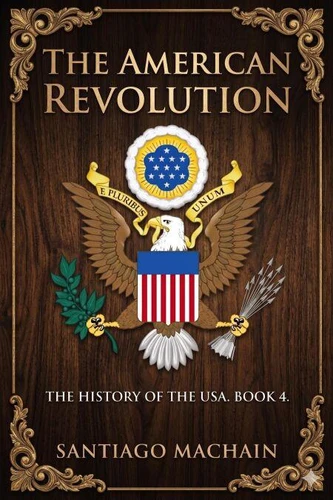
The American Revolution is a volume that strips away standard historical summaries to deliver a breathless, deeply granular immersion into the crucible of American independence. This fourth book traces the tumultuous evolution of a fractured provincial insurrection into a legally codified, globally recognized sovereign republic. From the sweltering, fly-ridden assembly rooms of the Second Continental Congress to the blood-slicked snows of Trenton and the clinical siege trenches of Yorktown, the narrative avoids traditional textbook generalities.
Instead, it places the reader directly alongside the war's key architects-George Washington, John Adams, Benjamin Franklin, and Thomas Paine-exposing the profound institutional collapses, toxic administrative conspiracies, and high-stakes realpolitik calculations that shaped the Atlantic world. This book details how an undisciplined citizen militia systematically mastered European military science, survived catastrophic logistical failures, and executed a separate peace that shocked the courts of Europe, laying the spatial and ideological foundations of a global superpower.
The American Revolution is a volume that strips away standard historical summaries to deliver a breathless, deeply granular immersion into the crucible of American independence. This fourth book traces the tumultuous evolution of a fractured provincial insurrection into a legally codified, globally recognized sovereign republic. From the sweltering, fly-ridden assembly rooms of the Second Continental Congress to the blood-slicked snows of Trenton and the clinical siege trenches of Yorktown, the narrative avoids traditional textbook generalities.
Instead, it places the reader directly alongside the war's key architects-George Washington, John Adams, Benjamin Franklin, and Thomas Paine-exposing the profound institutional collapses, toxic administrative conspiracies, and high-stakes realpolitik calculations that shaped the Atlantic world. This book details how an undisciplined citizen militia systematically mastered European military science, survived catastrophic logistical failures, and executed a separate peace that shocked the courts of Europe, laying the spatial and ideological foundations of a global superpower.

 , qui est-ce ?