Atlas is an historical researcher with over five decades of experience. His multi cultural upbringing, and extensive travels have given him a unique human-centric perspective on human history. Atlas's non biased penetrating insights, his evident love for humanity, and his poetic, philosophical mind combines in works which are not only informative, but thought provoking enough to give anyone the tools they need to navigate the human world successfully.
Nouveauté
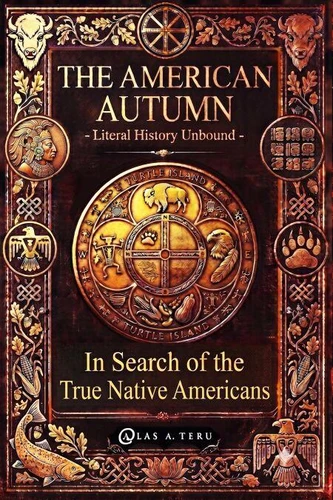
The American Autumn. Literal Human History, #4
Par :Formats :
Disponible dans votre compte client Decitre ou Furet du Nord dès validation de votre commande. Le format ePub est :
- Compatible avec une lecture sur My Vivlio (smartphone, tablette, ordinateur)
- Compatible avec une lecture sur liseuses Vivlio
- Pour les liseuses autres que Vivlio, vous devez utiliser le logiciel Adobe Digital Edition. Non compatible avec la lecture sur les liseuses Kindle, Remarkable et Sony
 , qui est-ce ?
Notre partenaire de plateforme de lecture numérique où vous retrouverez l'ensemble de vos ebooks gratuitement
Pour en savoir plus sur nos ebooks, consultez notre aide en ligne ici
C'est si simple ! Lisez votre ebook avec l'app Vivlio sur votre tablette, mobile ou ordinateur :

- FormatePub
- ISBN8235792234
- EAN9798235792234
- Date de parution26/07/2026
- Protection num.pas de protection
- Infos supplémentairesepub
- ÉditeurIoakim Ioakim
Résumé
THE WORLD BEFORE THE ICEThis is the final volume of the human story. Not because the story ends here. Because this is where the four great expressions of the human blueprint (the Caucasian Winter, the African Spring, the Asian Summer, and now the American Autumn) finally converge into a single picture. Before that convergence can be honest, this volume owes the reader something the first three books also lay out, so that everything that follows will make sense.
We humans have a base code which was formed over hundreds of thousands of years. It is this blueprint that separates us from the animal kingdom, allowing us to live with one another with a semblance of the productive peace that is a basic requirement for us all. That code rests on three things, and they work together, not separately. Rationality: the hard capacity to see that our own wishes, and our own tribe's beliefs, may simply not be true, to accept what lies outside our control in life and in nature, to hold onto the plain fact that what goes around comes around, and to weigh today's choice against a child not yet born.
Recognition: seeing another person the way we see ourselves, thou art I, extended outward not only to strangers but to nature, and to the wider whole we are all a part of. Respect: which is not a separate third thing so much as what naturally follows once Recognition has actually happened. Where all three hold together, the human blueprint holds. Where one goes first, the other two tend to follow it down.
That said, we humans are not fixed at birth. What happens to us shapes what we carry forward, the same conviction this series has held since Volume One. The people who eventually populated the Americas endured a version of the same ordeal as the people in volume one in this series: The Caucasian Winter: generations of hard, cold isolation, closely resembling what happened to the people who would become the raiders this series has already traced across Europe and Asia.
But one thing was different. When the Steppe raiders finally broke free of their own confinement, they found other peoples' lands to move into. Yet, when the first Americans broke free of their prison of ice, they found two entire continents, with no one else to contend with, but themselves. Whatever that long ordeal beat into them, then, had nowhere to go but inward, tested first against family, neighbor, and rival nation, long before it was ever tested against a stranger from across an ocean.
That is the story this volume tells: how a people shaped by their own version of the ice age's crucible built, broke, and rebuilt their codes among themselves for fifteen thousand years, before their distant counterparts, carrying the opposite legacy of that same shared trauma, finally arrived by ship.
We humans have a base code which was formed over hundreds of thousands of years. It is this blueprint that separates us from the animal kingdom, allowing us to live with one another with a semblance of the productive peace that is a basic requirement for us all. That code rests on three things, and they work together, not separately. Rationality: the hard capacity to see that our own wishes, and our own tribe's beliefs, may simply not be true, to accept what lies outside our control in life and in nature, to hold onto the plain fact that what goes around comes around, and to weigh today's choice against a child not yet born.
Recognition: seeing another person the way we see ourselves, thou art I, extended outward not only to strangers but to nature, and to the wider whole we are all a part of. Respect: which is not a separate third thing so much as what naturally follows once Recognition has actually happened. Where all three hold together, the human blueprint holds. Where one goes first, the other two tend to follow it down.
That said, we humans are not fixed at birth. What happens to us shapes what we carry forward, the same conviction this series has held since Volume One. The people who eventually populated the Americas endured a version of the same ordeal as the people in volume one in this series: The Caucasian Winter: generations of hard, cold isolation, closely resembling what happened to the people who would become the raiders this series has already traced across Europe and Asia.
But one thing was different. When the Steppe raiders finally broke free of their own confinement, they found other peoples' lands to move into. Yet, when the first Americans broke free of their prison of ice, they found two entire continents, with no one else to contend with, but themselves. Whatever that long ordeal beat into them, then, had nowhere to go but inward, tested first against family, neighbor, and rival nation, long before it was ever tested against a stranger from across an ocean.
That is the story this volume tells: how a people shaped by their own version of the ice age's crucible built, broke, and rebuilt their codes among themselves for fifteen thousand years, before their distant counterparts, carrying the opposite legacy of that same shared trauma, finally arrived by ship.