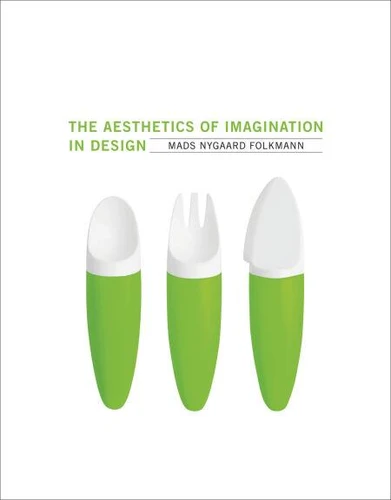
A theoretically informed investigation that relates the philosophies of aesthetics and imagination to understanding design practice. In The Aesthetics of Imagination in Design, Mads Folkmann investigates design in both material and immaterial terms. Design objects, Folkmann argues, will always be dual phenomena-material and immaterial, sensual and conceptual, actual and possible. Drawing on formal theories of aesthetics and the phenomenology of imagination, he seeks to answer fundamental questions about what design is and how it works that are often ignored in academic research.
Folkmann considers three conditions in design: the possible, the aesthetic, and the imagination. Imagination is a central formative power behind the creation and the life of design objects; aesthetics describes the sensual, conceptual, and contextual codes through which design objects communicate; the concept of the possible-the enabling of new uses, conceptions, and perceptions-lies behind imagination and aesthetics.
The possible, Folkmann argues, is contained as a structure of meaning within the objects of design, which act as part of our interface with the world. Taking a largely phenomenological perspective that reflects both continental and American pragmatist approaches, Folkmann also makes use of discourses that range from practice-focused accounts of design methodology to cultural studies. Throughout, he offers concrete examples to illustrate theoretical points.
Folkmann's philosophically informed account shows design-in all its manifestations, from physical products to principles of organization-to be an essential medium for the articulation and transformation of culture.
A theoretically informed investigation that relates the philosophies of aesthetics and imagination to understanding design practice. In The Aesthetics of Imagination in Design, Mads Folkmann investigates design in both material and immaterial terms. Design objects, Folkmann argues, will always be dual phenomena-material and immaterial, sensual and conceptual, actual and possible. Drawing on formal theories of aesthetics and the phenomenology of imagination, he seeks to answer fundamental questions about what design is and how it works that are often ignored in academic research.
Folkmann considers three conditions in design: the possible, the aesthetic, and the imagination. Imagination is a central formative power behind the creation and the life of design objects; aesthetics describes the sensual, conceptual, and contextual codes through which design objects communicate; the concept of the possible-the enabling of new uses, conceptions, and perceptions-lies behind imagination and aesthetics.
The possible, Folkmann argues, is contained as a structure of meaning within the objects of design, which act as part of our interface with the world. Taking a largely phenomenological perspective that reflects both continental and American pragmatist approaches, Folkmann also makes use of discourses that range from practice-focused accounts of design methodology to cultural studies. Throughout, he offers concrete examples to illustrate theoretical points.
Folkmann's philosophically informed account shows design-in all its manifestations, from physical products to principles of organization-to be an essential medium for the articulation and transformation of culture.

 , qui est-ce ?