
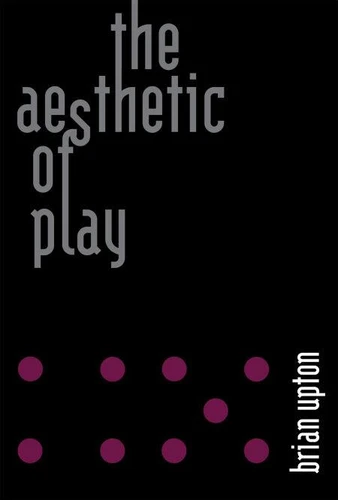
The Aesthetic of Play
Par :Formats :
Disponible dans votre compte client Decitre ou Furet du Nord dès validation de votre commande. Le format ePub protégé est :
- Compatible avec une lecture sur My Vivlio (smartphone, tablette, ordinateur)
- Compatible avec une lecture sur liseuses Vivlio
- Pour les liseuses autres que Vivlio, vous devez utiliser le logiciel Adobe Digital Edition. Non compatible avec la lecture sur les liseuses Kindle, Remarkable et Sony
- Non compatible avec un achat hors France métropolitaine
 , qui est-ce ?
Notre partenaire de plateforme de lecture numérique où vous retrouverez l'ensemble de vos ebooks gratuitement
Pour en savoir plus sur nos ebooks, consultez notre aide en ligne ici
C'est si simple ! Lisez votre ebook avec l'app Vivlio sur votre tablette, mobile ou ordinateur :

- Nombre de pages336
- FormatePub
- ISBN978-0-262-32421-2
- EAN9780262324212
- Date de parution20/03/2015
- Protection num.Adobe DRM
- Taille2 Mo
- Infos supplémentairesepub
- ÉditeurThe MIT Press
Résumé
A game designer considers the experience of play, why games have rules, and the relationship of play and narrative. The impulse toward play is very ancient, not only pre-cultural but pre-human; zoologists have identified play behaviors in turtles and in chimpanzees. Games have existed since antiquity; 5, 000-year-old board games have been recovered from Egyptian tombs. And yet we still lack a critical language for thinking about play.
Game designers are better at answering small questions ("Why is this battle boring?") than big ones ("What does this game mean?"). In this book, the game designer Brian Upton analyzes the experience of play-how playful activities unfold from moment to moment and how the rules we adopt constrain that unfolding. Drawing on games that range from Monopoly to Dungeons & Dragons to Guitar Hero, Upton develops a framework for understanding play, introducing a set of critical tools that can help us analyze games and game designs and identify ways in which they succeed or fail.
Upton also examines the broader epistemological implications of such a framework, exploring the role of play in the construction of meaning and what the existence of play says about the relationship between our thoughts and external reality. He considers the making of meaning in play and in every aspect of human culture, and he draws on findings in pragmatic epistemology, neuroscience, and semiotics to describe how meaning emerges from playful engagement.
Upton argues that play can also explain particular aspects of narrative; a play-based interpretive stance, he proposes, can help us understand the structure of books, of music, of theater, of art, and even of the process of critical engagement itself.
Game designers are better at answering small questions ("Why is this battle boring?") than big ones ("What does this game mean?"). In this book, the game designer Brian Upton analyzes the experience of play-how playful activities unfold from moment to moment and how the rules we adopt constrain that unfolding. Drawing on games that range from Monopoly to Dungeons & Dragons to Guitar Hero, Upton develops a framework for understanding play, introducing a set of critical tools that can help us analyze games and game designs and identify ways in which they succeed or fail.
Upton also examines the broader epistemological implications of such a framework, exploring the role of play in the construction of meaning and what the existence of play says about the relationship between our thoughts and external reality. He considers the making of meaning in play and in every aspect of human culture, and he draws on findings in pragmatic epistemology, neuroscience, and semiotics to describe how meaning emerges from playful engagement.
Upton argues that play can also explain particular aspects of narrative; a play-based interpretive stance, he proposes, can help us understand the structure of books, of music, of theater, of art, and even of the process of critical engagement itself.