SOLDES
Jusqu'à -70% sur une sélection d'articles*

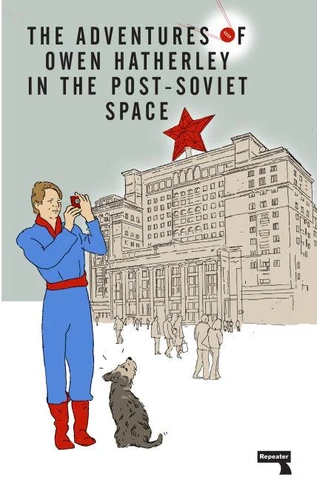
The Adventures of Owen Hatherley In The Post-Soviet Space
Par :Formats :
Disponible dans votre compte client Decitre ou Furet du Nord dès validation de votre commande. Le format ePub protégé est :
- Compatible avec une lecture sur My Vivlio (smartphone, tablette, ordinateur)
- Compatible avec une lecture sur liseuses Vivlio
- Pour les liseuses autres que Vivlio, vous devez utiliser le logiciel Adobe Digital Edition. Non compatible avec la lecture sur les liseuses Kindle, Remarkable et Sony
- Non compatible avec un achat hors France métropolitaine
 , qui est-ce ?
Notre partenaire de plateforme de lecture numérique où vous retrouverez l'ensemble de vos ebooks gratuitement
Pour en savoir plus sur nos ebooks, consultez notre aide en ligne ici
C'est si simple ! Lisez votre ebook avec l'app Vivlio sur votre tablette, mobile ou ordinateur :

- Nombre de pages600
- FormatePub
- ISBN978-1-912248-27-8
- EAN9781912248278
- Date de parution13/11/2018
- Protection num.Adobe DRM
- Taille243 Mo
- Infos supplémentairesepub
- ÉditeurRepeater
Résumé
Nearly thirty years after the fall of the USSR, the word "Soviet" should be as meaningless by now as "Hapsburg" or "Hohenzollern". Strangely, though, it endures, as places both inside and outside the former Soviet Union define themselves for or against what happened when it existed. But does that experience mean anything today, or is it just an enormous cul-de-sac? This book tries to find out, through an itinerary that goes from the Baltic to Belarus, from Ukraine to the Urals, from the Caucasus to Central Asia, and in cities that range from nuclear new towns of the Fifties to gleaming new capitals of the 21st century.
In this Eurasian post-Soviet space, we try to find the continuities with Communism - if there are any - and the remnants of revolutions both distant and recent. Instead of a wistful journey through ruins, this intends to be an engaged travelogue, a subjective, personal Marxist Humanist guidebook to somewhere that actually exists, but which is constantly haunted by what it didn't become, whether a real Communist utopia or a successful or fair capitalism.
In the course of this transcontinental account of what used to be the Soviet Union and is now a patchwork of EU democracies, neoliberal dictatorships and Soviet nostalgic enclaves (often found in the same countries) we might just find the outlines of a way of building cities that is a powerful alternative, both in the past and present.
In this Eurasian post-Soviet space, we try to find the continuities with Communism - if there are any - and the remnants of revolutions both distant and recent. Instead of a wistful journey through ruins, this intends to be an engaged travelogue, a subjective, personal Marxist Humanist guidebook to somewhere that actually exists, but which is constantly haunted by what it didn't become, whether a real Communist utopia or a successful or fair capitalism.
In the course of this transcontinental account of what used to be the Soviet Union and is now a patchwork of EU democracies, neoliberal dictatorships and Soviet nostalgic enclaves (often found in the same countries) we might just find the outlines of a way of building cities that is a powerful alternative, both in the past and present.
A propos de Owen Hatherley
8,82 €

19,99 €
9,49 €
11,99 €