Tobias George Smollett (19 March 1721 - 17 September 1771) was a prominent 18th-century Scottish novelist, surgeon, poet, and critic, best known for his picaresque novels, which significantly influenced the development of the British novel. He was often considered a leading novelist in the English language alongside contemporaries like Henry Fielding and Samuel Richardson.
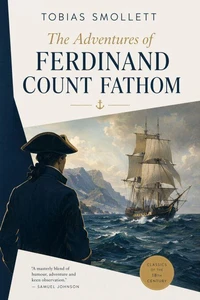
The Adventures of Ferdinand Count Fathom
Par :Formats :
Disponible dans votre compte client Decitre ou Furet du Nord dès validation de votre commande. Le format ePub est :
- Compatible avec une lecture sur My Vivlio (smartphone, tablette, ordinateur)
- Compatible avec une lecture sur liseuses Vivlio
- Pour les liseuses autres que Vivlio, vous devez utiliser le logiciel Adobe Digital Edition. Non compatible avec la lecture sur les liseuses Kindle, Remarkable et Sony
 , qui est-ce ?
Notre partenaire de plateforme de lecture numérique où vous retrouverez l'ensemble de vos ebooks gratuitement
Pour en savoir plus sur nos ebooks, consultez notre aide en ligne ici
C'est si simple ! Lisez votre ebook avec l'app Vivlio sur votre tablette, mobile ou ordinateur :

- Nombre de pages649
- FormatePub
- ISBN978-3-8190-0267-0
- EAN9783819002670
- Date de parution30/01/2026
- Protection num.Digital Watermarking
- Taille875 Ko
- Infos supplémentairesepub
- Éditeurepubli
Résumé
The first novel by a major English writer that is devoted to a thoroughgoing portrait of villainy, The Adventures of Ferdinand Count Fathom chronicles the life of an aberrant criminal character. Filled with striking satiric thrusts at the legal, medical, and military establishments of mid-eighteenth-century Europe and England, the novel reveals Tobias Smollett's capacities as a commentator on contemporary life.
First published in 1753, Ferdinand Count Fathom is an experimental work that explores the relations between history and fiction and introduces, for the first time in the English novel, episodes of Gothic melodrama.
Too long neglected and never before available in a carefully prepared scholarly edition, Ferdinand Count Fathom may now be read, understood, and appreciated against the literary and historical background of the eighteenth-century world.
Too long neglected and never before available in a carefully prepared scholarly edition, Ferdinand Count Fathom may now be read, understood, and appreciated against the literary and historical background of the eighteenth-century world.
A propos de Tobias Smollett
0,49 €
0,49 €

0,99 €
0,99 €