
Nouveauté
The Admiral's Sacrifice: John Byng and the Making of an Example
Par :Formats :
Disponible dans votre compte client Decitre ou Furet du Nord dès validation de votre commande. Le format ePub est :
- Compatible avec une lecture sur My Vivlio (smartphone, tablette, ordinateur)
- Compatible avec une lecture sur liseuses Vivlio
- Pour les liseuses autres que Vivlio, vous devez utiliser le logiciel Adobe Digital Edition. Non compatible avec la lecture sur les liseuses Kindle, Remarkable et Sony
 , qui est-ce ?
Notre partenaire de plateforme de lecture numérique où vous retrouverez l'ensemble de vos ebooks gratuitement
Pour en savoir plus sur nos ebooks, consultez notre aide en ligne ici
C'est si simple ! Lisez votre ebook avec l'app Vivlio sur votre tablette, mobile ou ordinateur :

- FormatePub
- ISBN8235044142
- EAN9798235044142
- Date de parution07/07/2026
- Protection num.pas de protection
- Infos supplémentairesepub
- ÉditeurIoakim Ioakim
Résumé
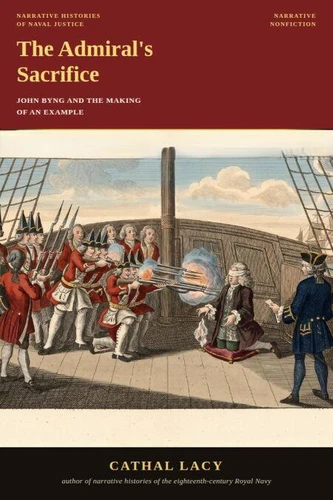
The Admiral's Sacrifice: John Byng and the Making of an Example On a gale-swept March morning in 1757, six Royal Marines shot dead a British admiral whose own court-martial had just acquitted him of cowardice. John Byng's crime was negligence, a failure to keep his fleet together off Minorca against a French force his own government had sent him to fight with rotten ships and hundreds of missing men.
This is the story of how an admiral's son, raised on a single effortless naval triumph, spent four decades never once tested in battle before the one afternoon that would define and destroy him, and how a ministry desperate to survive a summer of bread riots and national humiliation manufactured his guilt through an edited dispatch, a manipulated press, and a law drafted seven years earlier for an entirely different injustice.
The court that condemned him petitioned for his life. A Lord Commissioner refused to sign his death warrant. William Pitt appealed directly to the King. The French commander who defeated him sent a letter in his defence that British ministers intercepted and buried. Drawing on court-martial records, parliamentary debates, and the dispatches themselves, this is a gripping reconstruction of institutional cowardice dressed as justice, and the sacrifice of one man to save a government.
This is the story of how an admiral's son, raised on a single effortless naval triumph, spent four decades never once tested in battle before the one afternoon that would define and destroy him, and how a ministry desperate to survive a summer of bread riots and national humiliation manufactured his guilt through an edited dispatch, a manipulated press, and a law drafted seven years earlier for an entirely different injustice.
The court that condemned him petitioned for his life. A Lord Commissioner refused to sign his death warrant. William Pitt appealed directly to the King. The French commander who defeated him sent a letter in his defence that British ministers intercepted and buried. Drawing on court-martial records, parliamentary debates, and the dispatches themselves, this is a gripping reconstruction of institutional cowardice dressed as justice, and the sacrifice of one man to save a government.