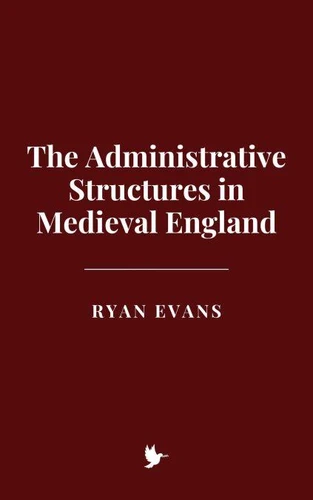
The Administrative Structures in Medieval England
Par :Formats :
Disponible dans votre compte client Decitre ou Furet du Nord dès validation de votre commande. Le format ePub est :
- Compatible avec une lecture sur My Vivlio (smartphone, tablette, ordinateur)
- Compatible avec une lecture sur liseuses Vivlio
- Pour les liseuses autres que Vivlio, vous devez utiliser le logiciel Adobe Digital Edition. Non compatible avec la lecture sur les liseuses Kindle, Remarkable et Sony
 , qui est-ce ?
Notre partenaire de plateforme de lecture numérique où vous retrouverez l'ensemble de vos ebooks gratuitement
Pour en savoir plus sur nos ebooks, consultez notre aide en ligne ici
C'est si simple ! Lisez votre ebook avec l'app Vivlio sur votre tablette, mobile ou ordinateur :

- FormatePub
- ISBN8230628828
- EAN9798230628828
- Date de parution23/01/2025
- Protection num.pas de protection
- Infos supplémentairesepub
- ÉditeurIndependently Published
Résumé
This book provides a comprehensive exploration of the evolution of administrative structures in medieval England, tracing their development from the early Anglo-Saxon period through to the Tudor dynasty and the Glorious Revolution. It offers a deep analysis of the historical, political, and social transformations that shaped English governance, examining key figures, events, and ideas that contributed to the consolidation of royal authority, the rise of common law, and the eventual establishment of constitutional monarchy.
Through detailed examinations of the monarchy, the legal system, the role of the Church, the manor, and Parliament, the book highlights the shifting power dynamics between the monarchy, the nobility, the emerging middle class, and common people. Drawing on primary sources such as the Domesday Book, Magna Carta, and the Bill of Rights, the text also integrates the political philosophies and ideological shifts that influenced the development of English legal and political structures.
The study of the English Civil War and the Glorious Revolution serves as a critical turning point, marking the end of absolute monarchy and the establishment of parliamentary supremacy, which laid the groundwork for modern democratic systems. Ultimately, the book illustrates how these administrative and political changes in medieval England provided the foundation for the enduring institutions of the English state, shaping the trajectory of not only English governance but also the broader evolution of Western constitutional and democratic thought.
Through detailed examinations of the monarchy, the legal system, the role of the Church, the manor, and Parliament, the book highlights the shifting power dynamics between the monarchy, the nobility, the emerging middle class, and common people. Drawing on primary sources such as the Domesday Book, Magna Carta, and the Bill of Rights, the text also integrates the political philosophies and ideological shifts that influenced the development of English legal and political structures.
The study of the English Civil War and the Glorious Revolution serves as a critical turning point, marking the end of absolute monarchy and the establishment of parliamentary supremacy, which laid the groundwork for modern democratic systems. Ultimately, the book illustrates how these administrative and political changes in medieval England provided the foundation for the enduring institutions of the English state, shaping the trajectory of not only English governance but also the broader evolution of Western constitutional and democratic thought.
A propos de Ryan Evans


2,99 €


2,99 €


2,99 €


3,99 €