SOLDES
Jusqu'à -70% sur une sélection d'articles*

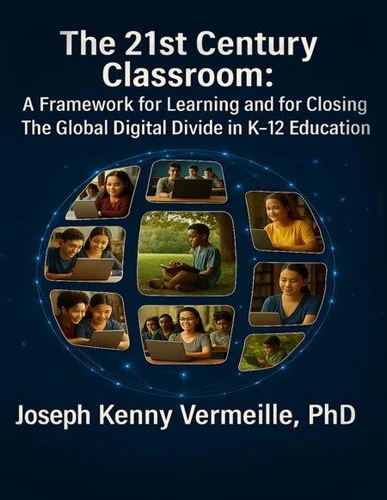
The 21ST CENTURY CLASSROOM: A Framework for Learning and for Closing The Global Digital Divide In K–12 Education
Par :Formats :
Disponible dans votre compte client Decitre ou Furet du Nord dès validation de votre commande. Le format ePub est :
- Compatible avec une lecture sur My Vivlio (smartphone, tablette, ordinateur)
- Compatible avec une lecture sur liseuses Vivlio
- Pour les liseuses autres que Vivlio, vous devez utiliser le logiciel Adobe Digital Edition. Non compatible avec la lecture sur les liseuses Kindle, Remarkable et Sony
 , qui est-ce ?
Notre partenaire de plateforme de lecture numérique où vous retrouverez l'ensemble de vos ebooks gratuitement
Pour en savoir plus sur nos ebooks, consultez notre aide en ligne ici
C'est si simple ! Lisez votre ebook avec l'app Vivlio sur votre tablette, mobile ou ordinateur :

- FormatePub
- ISBN8232723712
- EAN9798232723712
- Date de parution24/11/2025
- Protection num.pas de protection
- Infos supplémentairesepub
- ÉditeurDraft2Digital
Résumé
This book presents a rigorous, integrative framework for advancing K-12 education using technology, blending developmental theory, leading research, and practical solutions. Grounded in the seminal philosophies of Jean Piaget, Lev Vygotsky, and Jerome Bruner, it articulates how learning science, constructivist pedagogy, contemporary literature, and real-world innovation converge to meet the demands of the modern educational landscape.
The work unfolds in three major parts:· Theoretical Foundations: Deeply analyzes the learning, cognitive, and developmental theories that underpin effective technology adoption-emphasizing curriculum design, scaffolding, and social collaboration.· Research & Literary Synthesis: Synthesizes nearly two decades of educational literature around core themes including constructivism, Web 2.0 technologies, integration of standards, technology practicum, and the digital divide-always with an eye toward equity, access, and inclusivity.· Applied Frameworks & Global Solutions: Delivers actionable guidance for high-tech, low-tech, and no-tech settings, featuring practical models for adaptive learning, offline and blended resources, teacher training, and community partnerships.
Special focus is given to language tools for multilingual and indigenous contexts, scalable low-resource interventions, and strategies for bridging infrastructure gaps. Supplemented by appendices that catalogue and evaluate EdTech tools, summarize best practices, rank global language and accessibility solutions, and explore the role of knowledge brokers, the book equips educators, administrators, policymakers, and innovators with an adaptable roadmap.
Its evidence-based approach draws from case studies and nearly 90 peer-reviewed articles, distilling what works across diverse global educational settings. A Comprehensive K-12 Educational Technology Framework for the 21st Century is an authoritative guide to creating inclusive, learner-centered, and future-ready K-12 education through technology-ensuring that every child, regardless of context, has the opportunity to thrive in a rapidly changing world.
The work unfolds in three major parts:· Theoretical Foundations: Deeply analyzes the learning, cognitive, and developmental theories that underpin effective technology adoption-emphasizing curriculum design, scaffolding, and social collaboration.· Research & Literary Synthesis: Synthesizes nearly two decades of educational literature around core themes including constructivism, Web 2.0 technologies, integration of standards, technology practicum, and the digital divide-always with an eye toward equity, access, and inclusivity.· Applied Frameworks & Global Solutions: Delivers actionable guidance for high-tech, low-tech, and no-tech settings, featuring practical models for adaptive learning, offline and blended resources, teacher training, and community partnerships.
Special focus is given to language tools for multilingual and indigenous contexts, scalable low-resource interventions, and strategies for bridging infrastructure gaps. Supplemented by appendices that catalogue and evaluate EdTech tools, summarize best practices, rank global language and accessibility solutions, and explore the role of knowledge brokers, the book equips educators, administrators, policymakers, and innovators with an adaptable roadmap.
Its evidence-based approach draws from case studies and nearly 90 peer-reviewed articles, distilling what works across diverse global educational settings. A Comprehensive K-12 Educational Technology Framework for the 21st Century is an authoritative guide to creating inclusive, learner-centered, and future-ready K-12 education through technology-ensuring that every child, regardless of context, has the opportunity to thrive in a rapidly changing world.