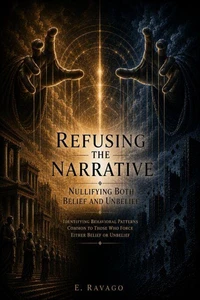
Reading the Bible should begin neither with belief nor with unbelief, but with the willingness to set aside both and let the narrative define its own terms for the analysis. Those who starts with belief imposes meanings the text does not contain, while those who starts with disbelief erases meanings the text does contain. When we study the Bible or any written narrative, we can map the frameworks that appear throughout the document, and by doing so we come to understand it gradually rather than all at once.
Mapping the meanings and structuring a framework to understand what we are reading does not mean we are adding or subtracting from it, for the document itself remains unchanged. We may arrive at a certain point of understanding, but we must be willing to adjust our maps accordingly when we discover new words that carry internal meanings in the source document. Systematically mapping the meanings out of a scroll does not guarantee that we will arrive at the most correct framework of the text, yet it will definitely provide a more solid foundation and greater depth to our understanding of the subject matter.
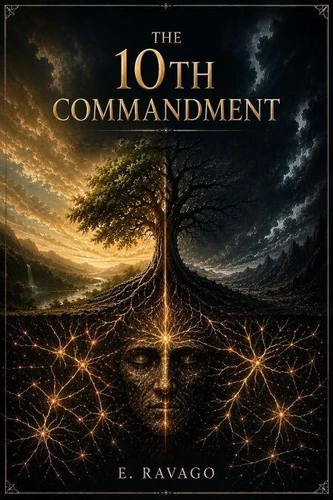
The 10th Commandment offers the living manifestation of this mapping methodology, for it is not only about the creative process we can employ to gain deeper understanding of the verses but also about the restrictions we must impose along the way. We may build frameworks to understand the text, but we must never consume the notion that any framework is already perfect, for that consumption would sever us from the very purpose of study, which is learning and the willingness to be corrected.
Reading the Bible should begin neither with belief nor with unbelief, but with the willingness to set aside both and let the narrative define its own terms for the analysis. Those who starts with belief imposes meanings the text does not contain, while those who starts with disbelief erases meanings the text does contain. When we study the Bible or any written narrative, we can map the frameworks that appear throughout the document, and by doing so we come to understand it gradually rather than all at once.
Mapping the meanings and structuring a framework to understand what we are reading does not mean we are adding or subtracting from it, for the document itself remains unchanged. We may arrive at a certain point of understanding, but we must be willing to adjust our maps accordingly when we discover new words that carry internal meanings in the source document. Systematically mapping the meanings out of a scroll does not guarantee that we will arrive at the most correct framework of the text, yet it will definitely provide a more solid foundation and greater depth to our understanding of the subject matter.
The 10th Commandment offers the living manifestation of this mapping methodology, for it is not only about the creative process we can employ to gain deeper understanding of the verses but also about the restrictions we must impose along the way. We may build frameworks to understand the text, but we must never consume the notion that any framework is already perfect, for that consumption would sever us from the very purpose of study, which is learning and the willingness to be corrected.


 , qui est-ce ?