SOLDES
Jusqu'à -70% sur une sélection d'articles*

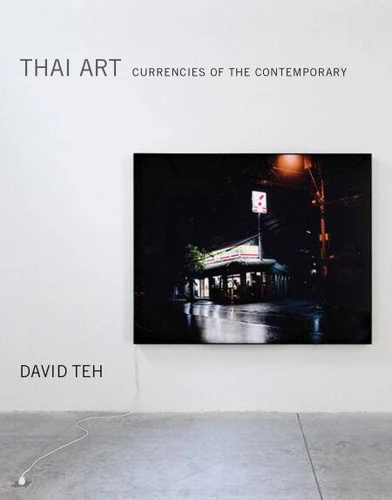
Thai Art. Currencies of the Contemporary
Par :Formats :
Disponible dans votre compte client Decitre ou Furet du Nord dès validation de votre commande. Le format ePub protégé est :
- Compatible avec une lecture sur My Vivlio (smartphone, tablette, ordinateur)
- Compatible avec une lecture sur liseuses Vivlio
- Pour les liseuses autres que Vivlio, vous devez utiliser le logiciel Adobe Digital Edition. Non compatible avec la lecture sur les liseuses Kindle, Remarkable et Sony
- Non compatible avec un achat hors France métropolitaine
 , qui est-ce ?
Notre partenaire de plateforme de lecture numérique où vous retrouverez l'ensemble de vos ebooks gratuitement
Pour en savoir plus sur nos ebooks, consultez notre aide en ligne ici
C'est si simple ! Lisez votre ebook avec l'app Vivlio sur votre tablette, mobile ou ordinateur :

- Nombre de pages296
- FormatePub
- ISBN978-0-262-33892-9
- EAN9780262338929
- Date de parution31/03/2017
- Protection num.Adobe DRM
- Taille19 Mo
- Infos supplémentairesepub
- ÉditeurThe MIT Press
Résumé
The interplay of the local and the global in contemporary Thai art, as artists strive for international recognition and a new meaning of the national. Since the 1990s, Thai contemporary art has achieved international recognition, circulating globally by way of biennials, museums, and commercial galleries. Many Thai artists have shed identification with their nation; but "Thainess" remains an interpretive crutch for understanding their work.
In this book, the curator and critic David Teh examines the tension between the global and the local in Thai contemporary art. Writing the first serious study of Thai art since 1992 (and noting that art history and criticism have lagged behind the market in recognizing it), he describes the competing claims to contemporaneity, as staked in Thailand and on behalf of Thai art elsewhere. He shows how the values of the global art world are exchanged with local ones, how they do and don't correspond, and how these discrepancies have been exploited.
How can we make sense of globally circulating art without forgoing the interpretive resources of the local, national, or regional context? Teh examines the work of artists who straddle the local and the global, becoming willing agents of assimilation yet resisting homogenization. He describes the transition from an artistic subjectivity couched in terms of national community to a more qualified, postnational one, against the backdrop of the singular but waning sovereignty of the Thai monarchy and sustained political and economic turmoil.
Among the national currencies of Thai art that Teh identifies are an agricultural symbology, a Siamese poetics of distance and itinerancy, and Hindu-Buddhist conceptions of charismatic power. Each of these currencies has been converted to a legal tender in global art-signifying sustainability, utopia, the conceptual, and the relational-but what is lost, and what may be gained, in such exchanges?
In this book, the curator and critic David Teh examines the tension between the global and the local in Thai contemporary art. Writing the first serious study of Thai art since 1992 (and noting that art history and criticism have lagged behind the market in recognizing it), he describes the competing claims to contemporaneity, as staked in Thailand and on behalf of Thai art elsewhere. He shows how the values of the global art world are exchanged with local ones, how they do and don't correspond, and how these discrepancies have been exploited.
How can we make sense of globally circulating art without forgoing the interpretive resources of the local, national, or regional context? Teh examines the work of artists who straddle the local and the global, becoming willing agents of assimilation yet resisting homogenization. He describes the transition from an artistic subjectivity couched in terms of national community to a more qualified, postnational one, against the backdrop of the singular but waning sovereignty of the Thai monarchy and sustained political and economic turmoil.
Among the national currencies of Thai art that Teh identifies are an agricultural symbology, a Siamese poetics of distance and itinerancy, and Hindu-Buddhist conceptions of charismatic power. Each of these currencies has been converted to a legal tender in global art-signifying sustainability, utopia, the conceptual, and the relational-but what is lost, and what may be gained, in such exchanges?