SOLDES
Jusqu'à -70% sur une sélection d'articles*

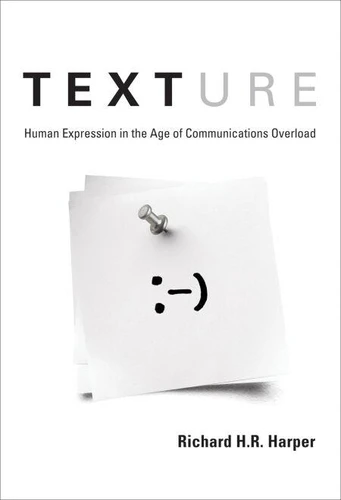
Texture. Human Expression in the Age of Communications Overload
Par :Formats :
Disponible dans votre compte client Decitre ou Furet du Nord dès validation de votre commande. Le format ePub protégé est :
- Compatible avec une lecture sur My Vivlio (smartphone, tablette, ordinateur)
- Compatible avec une lecture sur liseuses Vivlio
- Pour les liseuses autres que Vivlio, vous devez utiliser le logiciel Adobe Digital Edition. Non compatible avec la lecture sur les liseuses Kindle, Remarkable et Sony
- Non compatible avec un achat hors France métropolitaine
 , qui est-ce ?
Notre partenaire de plateforme de lecture numérique où vous retrouverez l'ensemble de vos ebooks gratuitement
Pour en savoir plus sur nos ebooks, consultez notre aide en ligne ici
C'est si simple ! Lisez votre ebook avec l'app Vivlio sur votre tablette, mobile ou ordinateur :

- Nombre de pages320
- FormatePub
- ISBN978-0-262-28865-1
- EAN9780262288651
- Date de parution21/09/2012
- Protection num.Adobe DRM
- Taille340 Ko
- Infos supplémentairesepub
- ÉditeurThe MIT Press
Résumé
Why we complain about communication overload even as we seek new ways to communicate. Our workdays are so filled with emails, instant messaging, and RSS feeds that we complain that there's not enough time to get our actual work done. At home, we are besieged by telephone calls on landlines and cell phones, the beeps that signal text messages, and work emails on our BlackBerrys. It's too much, we cry (or type) as we update our Facebook pages, compose a blog post, or check to see what Shaquille O'Neal has to say on Twitter.
In Texture, Richard Harper asks why we seek out new ways of communicating even as we complain about communication overload. Harper describes the mistaken assumptions of developers that "more" is always better and argues that users prefer simpler technologies that allow them to create social bonds. Communication is not just the exchange of information. There is a texture to our communicative practices, manifest in the different means we choose to communicate (quick or slow, permanent or ephemeral).
In Texture, Richard Harper asks why we seek out new ways of communicating even as we complain about communication overload. Harper describes the mistaken assumptions of developers that "more" is always better and argues that users prefer simpler technologies that allow them to create social bonds. Communication is not just the exchange of information. There is a texture to our communicative practices, manifest in the different means we choose to communicate (quick or slow, permanent or ephemeral).