SOLDES
Jusqu'à -70% sur une sélection d'articles*

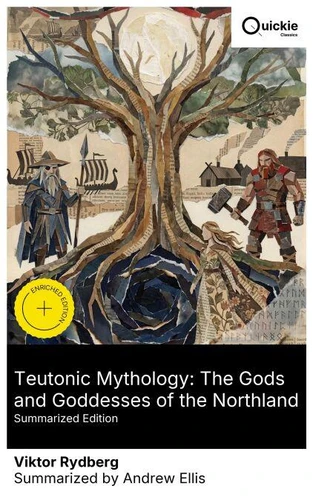
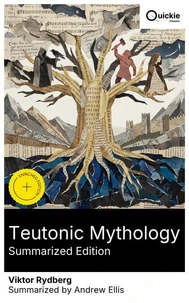
Teutonic Mythology: The Gods and Goddesses of the Northland (Summarized Edition). Enriched edition. A 19th-century philological synthesis of Norse myth: Eddic lore from Yggdrasil to Ragnarök
Par : ,Formats :
Disponible dans votre compte client Decitre ou Furet du Nord dès validation de votre commande. Le format ePub est :
- Compatible avec une lecture sur My Vivlio (smartphone, tablette, ordinateur)
- Compatible avec une lecture sur liseuses Vivlio
- Pour les liseuses autres que Vivlio, vous devez utiliser le logiciel Adobe Digital Edition. Non compatible avec la lecture sur les liseuses Kindle, Remarkable et Sony
 , qui est-ce ?
Notre partenaire de plateforme de lecture numérique où vous retrouverez l'ensemble de vos ebooks gratuitement
Pour en savoir plus sur nos ebooks, consultez notre aide en ligne ici
C'est si simple ! Lisez votre ebook avec l'app Vivlio sur votre tablette, mobile ou ordinateur :

- Nombre de pages226
- FormatePub
- ISBN859-65--4787805-6
- EAN8596547878056
- Date de parution10/01/2026
- Protection num.Digital Watermarking
- Taille976 Ko
- Infos supplémentairesepub
- ÉditeurQUICKIE CLASSICS
Résumé
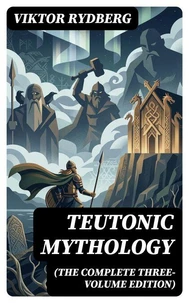
In Teutonic Mythology: The Gods and Goddesses of the Northland (Vol. 1-3), Viktor Rydberg reconstructs the Germanic cosmos by interlacing Eddaic verse, kennings, sagas, law codes, and place-names into a narrative. His style, both philological and visionary, joins etymology with comparative Indo-European mythography, placing Odin, Thor, Freyja, and heroic cycles within a cosmogony from Ginnungagap to Ragnarök.
Written in the wake of Grimm and Romantic historicism, it seeks coherence lost to Christian redaction, advancing new identifications and chronologies. Rydberg (1828-1895) was a Swedish poet, novelist, and intellectual whose training in classics and biblical criticism sharpened his source work. A liberal humanist and member of the Swedish Academy, he fused journalistic discipline with antiquarian zeal, seeking in the Nordic past an ethical counter to modern materialism.
His historical fiction and essays supplied the confidence-and the skepticism toward late interpolations-driving this synthesis. Scholars of Norse studies, comparative religion, folklore, and intellectual history will find this edition rewarding. Even where its bold reconstructions invite debate, the collation of texts, lucid cross-references, and architecture make it invaluable as both reference and artifact of nineteenth-century mythography.
For readers who wish to see fragments cohere into a mythic epic, Rydberg remains a demanding yet bracing guide. Quickie Classics summarizes timeless works with precision, preserving the author's voice and keeping the prose clear, fast, and readable-distilled, never diluted. Enriched Edition extras: Introduction · Synopsis · Historical Context · Brief Analysis · 4 Reflection Q&As · Editorial Footnotes.
Written in the wake of Grimm and Romantic historicism, it seeks coherence lost to Christian redaction, advancing new identifications and chronologies. Rydberg (1828-1895) was a Swedish poet, novelist, and intellectual whose training in classics and biblical criticism sharpened his source work. A liberal humanist and member of the Swedish Academy, he fused journalistic discipline with antiquarian zeal, seeking in the Nordic past an ethical counter to modern materialism.
His historical fiction and essays supplied the confidence-and the skepticism toward late interpolations-driving this synthesis. Scholars of Norse studies, comparative religion, folklore, and intellectual history will find this edition rewarding. Even where its bold reconstructions invite debate, the collation of texts, lucid cross-references, and architecture make it invaluable as both reference and artifact of nineteenth-century mythography.
For readers who wish to see fragments cohere into a mythic epic, Rydberg remains a demanding yet bracing guide. Quickie Classics summarizes timeless works with precision, preserving the author's voice and keeping the prose clear, fast, and readable-distilled, never diluted. Enriched Edition extras: Introduction · Synopsis · Historical Context · Brief Analysis · 4 Reflection Q&As · Editorial Footnotes.