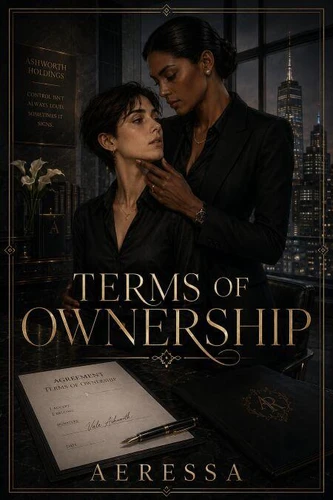
"You're offering to erase everything I owe."Vale Ashworth should walk away. She knows that the moment Countess Reyes slides the contract across her desk. At twenty-six, Vale is barely holding her life together. Her mother's medical bills keep climbing. Collections calls follow her everywhere. At work, exhaustion is starting to cost her the one thing she cannot afford to lose: her career. Then the most powerful woman in the company offers her a way out.
Countess Reyes is forty-one, reclusive, impossibly wealthy, and feared by nearly everyone who works for her. She built an empire by needing no one, trusting no one, and maintaining absolute control over every room she enters. Now she wants control of Vale. The terms are simple enough to understand and impossible to mistake. Reyes will erase Vale's debts and remove every burden crushing her. In return, Vale will surrender control of her schedule, her wardrobe, her private time, and the ordinary decisions that once belonged only to her.
Vale refuses. Until survival leaves her staring at the same contract again. What begins as a cold transaction becomes an architecture of rules: meals chosen for her, clothes waiting in her wardrobe, curfews that are expected to be obeyed, and a woman whose quiet approval affects Vale far more deeply than it should. She should hate every second of it. Instead, beneath the resentment, something dangerous begins to feel like relief.
For the first time in her life, Vale does not have to hold everything together. Someone else notices when she has not eaten. Someone else anticipates the disasters before they reach her. Someone else takes control before she can work herself bloody trying to prove she deserves to survive. And Reyes is discovering a problem of her own. Possessing Vale was supposed to make wanting her safe. It doesn't.
Because the closer Vale comes, the harder it becomes for Reyes to distinguish control from devotion-and the more terrifying the possibility becomes that the one woman she tried to own may be the only person capable of undoing her completely. When survival turns into surrender and ownership begins to resemble something neither woman knows how to name, what happens when the contract is no longer the most dangerous thing binding them together?
"You're offering to erase everything I owe."Vale Ashworth should walk away. She knows that the moment Countess Reyes slides the contract across her desk. At twenty-six, Vale is barely holding her life together. Her mother's medical bills keep climbing. Collections calls follow her everywhere. At work, exhaustion is starting to cost her the one thing she cannot afford to lose: her career. Then the most powerful woman in the company offers her a way out.
Countess Reyes is forty-one, reclusive, impossibly wealthy, and feared by nearly everyone who works for her. She built an empire by needing no one, trusting no one, and maintaining absolute control over every room she enters. Now she wants control of Vale. The terms are simple enough to understand and impossible to mistake. Reyes will erase Vale's debts and remove every burden crushing her. In return, Vale will surrender control of her schedule, her wardrobe, her private time, and the ordinary decisions that once belonged only to her.
Vale refuses. Until survival leaves her staring at the same contract again. What begins as a cold transaction becomes an architecture of rules: meals chosen for her, clothes waiting in her wardrobe, curfews that are expected to be obeyed, and a woman whose quiet approval affects Vale far more deeply than it should. She should hate every second of it. Instead, beneath the resentment, something dangerous begins to feel like relief.
For the first time in her life, Vale does not have to hold everything together. Someone else notices when she has not eaten. Someone else anticipates the disasters before they reach her. Someone else takes control before she can work herself bloody trying to prove she deserves to survive. And Reyes is discovering a problem of her own. Possessing Vale was supposed to make wanting her safe. It doesn't.
Because the closer Vale comes, the harder it becomes for Reyes to distinguish control from devotion-and the more terrifying the possibility becomes that the one woman she tried to own may be the only person capable of undoing her completely. When survival turns into surrender and ownership begins to resemble something neither woman knows how to name, what happens when the contract is no longer the most dangerous thing binding them together?


 , qui est-ce ?