SOLDES
Jusqu'à -70% sur une sélection d'articles*

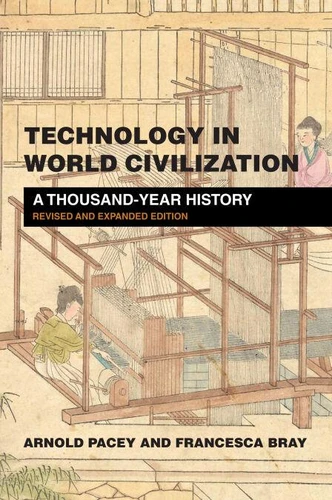
Technology in World Civilization, revised and expanded edition. A Thousand-Year History
Par : ,Formats :
Disponible dans votre compte client Decitre ou Furet du Nord dès validation de votre commande. Le format ePub protégé est :
- Compatible avec une lecture sur My Vivlio (smartphone, tablette, ordinateur)
- Compatible avec une lecture sur liseuses Vivlio
- Pour les liseuses autres que Vivlio, vous devez utiliser le logiciel Adobe Digital Edition. Non compatible avec la lecture sur les liseuses Kindle, Remarkable et Sony
- Non compatible avec un achat hors France métropolitaine
 , qui est-ce ?
Notre partenaire de plateforme de lecture numérique où vous retrouverez l'ensemble de vos ebooks gratuitement
Pour en savoir plus sur nos ebooks, consultez notre aide en ligne ici
C'est si simple ! Lisez votre ebook avec l'app Vivlio sur votre tablette, mobile ou ordinateur :

- Nombre de pages356
- FormatePub
- ISBN978-0-262-36628-1
- EAN9780262366281
- Date de parution03/08/2021
- Protection num.Adobe DRM
- Taille40 Mo
- Infos supplémentairesepub
- ÉditeurThe MIT Press
Résumé
The new edition of a milestone work on the global history of technology. This milestone history of technology, first published in 1990 and now revised and expanded in light of recent research, broke new ground by taking a global view, avoiding the conventional Eurocentric perspective and placing the development of technology squarely in the context of a "world civilization." Case studies include "technological dialogues" between China and West Asia in the eleventh century, medieval African states and the Islamic world, and the United States and Japan post-1950.
It examines railway empires through the examples of Russia and Japan and explores current synergies of innovation in energy supply and smartphone technology through African cases. The book uses the term "technological dialogue" to challenges the top-down concept of "technology transfer, " showing instead that technologies are typically modified to fit local needs and conditions, often triggering further innovation.
The authors trace these encounters and exchanges over a thousand years, examining changes in such technologies as agriculture, firearms, printing, electricity, and railroads. A new chapter brings the narrative into the twenty-first century, discussing technological developments including petrochemicals, aerospace, and digitalization from often unexpected global viewpoints and asking what new kind of industrial revolution is needed to meet the challenges of the Anthropocene.
It examines railway empires through the examples of Russia and Japan and explores current synergies of innovation in energy supply and smartphone technology through African cases. The book uses the term "technological dialogue" to challenges the top-down concept of "technology transfer, " showing instead that technologies are typically modified to fit local needs and conditions, often triggering further innovation.
The authors trace these encounters and exchanges over a thousand years, examining changes in such technologies as agriculture, firearms, printing, electricity, and railroads. A new chapter brings the narrative into the twenty-first century, discussing technological developments including petrochemicals, aerospace, and digitalization from often unexpected global viewpoints and asking what new kind of industrial revolution is needed to meet the challenges of the Anthropocene.