SOLDES
Jusqu'à -70% sur une sélection d'articles*

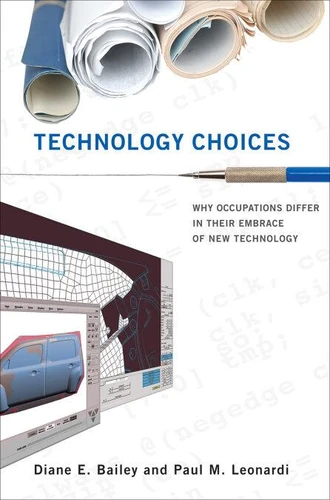
Technology Choices. Why Occupations Differ in Their Embrace of New Technology
Par : ,Formats :
Disponible dans votre compte client Decitre ou Furet du Nord dès validation de votre commande. Le format ePub protégé est :
- Compatible avec une lecture sur My Vivlio (smartphone, tablette, ordinateur)
- Compatible avec une lecture sur liseuses Vivlio
- Pour les liseuses autres que Vivlio, vous devez utiliser le logiciel Adobe Digital Edition. Non compatible avec la lecture sur les liseuses Kindle, Remarkable et Sony
- Non compatible avec un achat hors France métropolitaine
 , qui est-ce ?
Notre partenaire de plateforme de lecture numérique où vous retrouverez l'ensemble de vos ebooks gratuitement
Pour en savoir plus sur nos ebooks, consultez notre aide en ligne ici
C'est si simple ! Lisez votre ebook avec l'app Vivlio sur votre tablette, mobile ou ordinateur :

- Nombre de pages288
- FormatePub
- ISBN978-0-262-32369-7
- EAN9780262323697
- Date de parution30/01/2015
- Protection num.Adobe DRM
- Taille2 Mo
- Infos supplémentairesepub
- ÉditeurThe MIT Press
Résumé
An analysis of the occupational factors that shape the technology choices made by people who perform the same type of work. Why do people who perform largely the same type of work make different technology choices in the workplace? An automotive design engineer working in India, for example, finds advanced information and communication technologies essential, allowing him to work with far-flung colleagues; a structural engineer in California relies more on paper-based technologies for her everyday work; and a software engineer in Silicon Valley operates on multiple digital levels simultaneously all day, continuing after hours on a company-supplied home computer and network connection.
In Technology Choices, Diane Bailey and Paul Leonardi argue that occupational factors-rather than personal preference or purely technological concerns-strongly shape workers' technology choices. Drawing on extensive field work-a decade's worth of observations and interviews in seven engineering firms in eight countries-Bailey and Leonardi challenge the traditional views of technology choices: technological determinism and social constructivism.
Their innovative occupational perspective allows them to explore how external forces shape ideas, beliefs, and norms in ways that steer individuals to particular technology choices-albeit in somewhat predictable and generalizable ways. They examine three relationships at the heart of technology choices: human to technology, technology to technology, and human to human. An occupational perspective, they argue, helps us not only to understand past technology choices, but also to predict future ones.
In Technology Choices, Diane Bailey and Paul Leonardi argue that occupational factors-rather than personal preference or purely technological concerns-strongly shape workers' technology choices. Drawing on extensive field work-a decade's worth of observations and interviews in seven engineering firms in eight countries-Bailey and Leonardi challenge the traditional views of technology choices: technological determinism and social constructivism.
Their innovative occupational perspective allows them to explore how external forces shape ideas, beliefs, and norms in ways that steer individuals to particular technology choices-albeit in somewhat predictable and generalizable ways. They examine three relationships at the heart of technology choices: human to technology, technology to technology, and human to human. An occupational perspective, they argue, helps us not only to understand past technology choices, but also to predict future ones.