
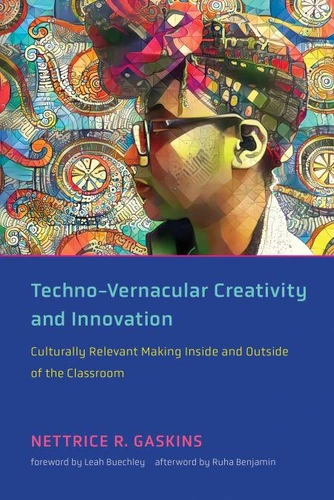
Techno-Vernacular Creativity and Innovation. Culturally Relevant Making Inside and Outside of the Classroom
Par : , ,Formats :
Disponible dans votre compte client Decitre ou Furet du Nord dès validation de votre commande. Le format ePub protégé est :
- Compatible avec une lecture sur My Vivlio (smartphone, tablette, ordinateur)
- Compatible avec une lecture sur liseuses Vivlio
- Pour les liseuses autres que Vivlio, vous devez utiliser le logiciel Adobe Digital Edition. Non compatible avec la lecture sur les liseuses Kindle, Remarkable et Sony
- Non compatible avec un achat hors France métropolitaine
 , qui est-ce ?
Notre partenaire de plateforme de lecture numérique où vous retrouverez l'ensemble de vos ebooks gratuitement
Pour en savoir plus sur nos ebooks, consultez notre aide en ligne ici
C'est si simple ! Lisez votre ebook avec l'app Vivlio sur votre tablette, mobile ou ordinateur :

- Nombre de pages206
- FormatePub
- ISBN978-0-262-36594-9
- EAN9780262365949
- Date de parution10/08/2021
- Protection num.Adobe DRM
- Taille34 Mo
- Infos supplémentairesepub
- ÉditeurThe MIT Press
Résumé
A novel approach to STEAM learning that engages students from historically marginalized communities in culturally relevant and inclusive maker education. The growing maker movement in education has become an integral part of both STEM and STEAM learning, tapping into the natural DIY inclinations of creative people as well as the educational power of inventing or making things. And yet African American, Latino/a American, and Indigenous people are underrepresented in maker culture and education.
In this book, Nettrice Gaskins proposes a novel approach to STEAM learning that engages students from historically marginalized communities in culturally relevant and inclusive maker education. Techno-vernacular creativity (TVC) connects technical literacy, equity, and culture, encompassing creative innovations produced by ethnic groups that are often overlooked. TVC uses three main modes of activity: reappropriation, remixing, and improvisation.
Gaskins looks at each of the three modes in turn, guiding readers from research into practice. Drawing on real-world examples, she shows how TVC creates dynamic learning environments where underrepresented ethnic students feel that they belong. Students who remix computationally, for instance, have larger toolkits of computational skills with which to connect cultural practices to STEAM subjects; reappropriation offers a way to navigate cultural repertoires; improvisation is firmly rooted in cultural and creative practices.
Finally, Gaskins explores an equity-oriented approach that makes a distinction between conventional or dominant pedagogical approaches and culturally relevant or responsive making methods and practices. She describes TVC habits of mind and suggests methods of instructions and projects.
In this book, Nettrice Gaskins proposes a novel approach to STEAM learning that engages students from historically marginalized communities in culturally relevant and inclusive maker education. Techno-vernacular creativity (TVC) connects technical literacy, equity, and culture, encompassing creative innovations produced by ethnic groups that are often overlooked. TVC uses three main modes of activity: reappropriation, remixing, and improvisation.
Gaskins looks at each of the three modes in turn, guiding readers from research into practice. Drawing on real-world examples, she shows how TVC creates dynamic learning environments where underrepresented ethnic students feel that they belong. Students who remix computationally, for instance, have larger toolkits of computational skills with which to connect cultural practices to STEAM subjects; reappropriation offers a way to navigate cultural repertoires; improvisation is firmly rooted in cultural and creative practices.
Finally, Gaskins explores an equity-oriented approach that makes a distinction between conventional or dominant pedagogical approaches and culturally relevant or responsive making methods and practices. She describes TVC habits of mind and suggests methods of instructions and projects.