
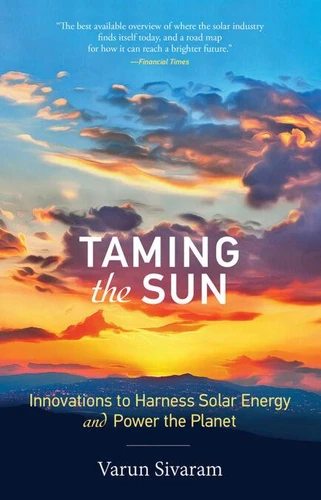
Taming the Sun. Innovations to Harness Solar Energy and Power the Planet
Par :Formats :
Disponible dans votre compte client Decitre ou Furet du Nord dès validation de votre commande. Le format ePub protégé est :
- Compatible avec une lecture sur My Vivlio (smartphone, tablette, ordinateur)
- Compatible avec une lecture sur liseuses Vivlio
- Pour les liseuses autres que Vivlio, vous devez utiliser le logiciel Adobe Digital Edition. Non compatible avec la lecture sur les liseuses Kindle, Remarkable et Sony
- Non compatible avec un achat hors France métropolitaine
 , qui est-ce ?
Notre partenaire de plateforme de lecture numérique où vous retrouverez l'ensemble de vos ebooks gratuitement
Pour en savoir plus sur nos ebooks, consultez notre aide en ligne ici
C'est si simple ! Lisez votre ebook avec l'app Vivlio sur votre tablette, mobile ou ordinateur :

- Nombre de pages392
- FormatePub
- ISBN978-0-262-34561-3
- EAN9780262345613
- Date de parution02/03/2018
- Protection num.Adobe DRM
- Taille16 Mo
- Infos supplémentairesepub
- ÉditeurThe MIT Press
Résumé
How solar could spark a clean-energy transition through transformative innovation-creative financing, revolutionary technologies, and flexible energy systems. Solar energy, once a niche application for a limited market, has become the cheapest and fastest-growing power source on earth. What's more, its potential is nearly limitless-every hour the sun beams down more energy than the world uses in a year.
But in Taming the Sun, energy expert Varun Sivaram warns that the world is not yet equipped to harness erratic sunshine to meet most of its energy needs. And if solar's current surge peters out, prospects for replacing fossil fuels and averting catastrophic climate change will dim. Innovation can brighten those prospects, Sivaram explains, drawing on firsthand experience and original research spanning science, business, and government.
Financial innovation is already enticing deep-pocketed investors to fund solar projects around the world, from the sunniest deserts to the poorest villages. Technological innovation could replace today's solar panels with coatings as cheap as paint and employ artificial photosynthesis to store intermittent sunshine as convenient fuels. And systemic innovation could add flexibility to the world's power grids and other energy systems so they can dependably channel the sun's unreliable energy.
Unleashing all this innovation will require visionary public policy: funding researchers developing next-generation solar technologies, refashioning energy systems and economic markets, and putting together a diverse clean energy portfolio. Although solar can't power the planet by itself, it can be the centerpiece of a global clean energy revolution. A Council on Foreign Relations Book
But in Taming the Sun, energy expert Varun Sivaram warns that the world is not yet equipped to harness erratic sunshine to meet most of its energy needs. And if solar's current surge peters out, prospects for replacing fossil fuels and averting catastrophic climate change will dim. Innovation can brighten those prospects, Sivaram explains, drawing on firsthand experience and original research spanning science, business, and government.
Financial innovation is already enticing deep-pocketed investors to fund solar projects around the world, from the sunniest deserts to the poorest villages. Technological innovation could replace today's solar panels with coatings as cheap as paint and employ artificial photosynthesis to store intermittent sunshine as convenient fuels. And systemic innovation could add flexibility to the world's power grids and other energy systems so they can dependably channel the sun's unreliable energy.
Unleashing all this innovation will require visionary public policy: funding researchers developing next-generation solar technologies, refashioning energy systems and economic markets, and putting together a diverse clean energy portfolio. Although solar can't power the planet by itself, it can be the centerpiece of a global clean energy revolution. A Council on Foreign Relations Book