SOLDES
Jusqu'à -70% sur une sélection d'articles*

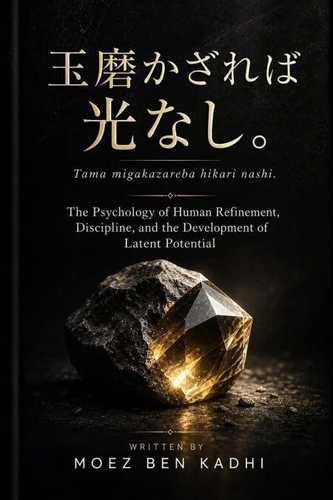
Tama migakazareba hikari nashi
Par :Formats :
Disponible dans votre compte client Decitre ou Furet du Nord dès validation de votre commande. Le format ePub est :
- Compatible avec une lecture sur My Vivlio (smartphone, tablette, ordinateur)
- Compatible avec une lecture sur liseuses Vivlio
- Pour les liseuses autres que Vivlio, vous devez utiliser le logiciel Adobe Digital Edition. Non compatible avec la lecture sur les liseuses Kindle, Remarkable et Sony
 , qui est-ce ?
Notre partenaire de plateforme de lecture numérique où vous retrouverez l'ensemble de vos ebooks gratuitement
Pour en savoir plus sur nos ebooks, consultez notre aide en ligne ici
C'est si simple ! Lisez votre ebook avec l'app Vivlio sur votre tablette, mobile ou ordinateur :

- FormatePub
- ISBN8235847460
- EAN9798235847460
- Date de parution03/05/2026
- Protection num.pas de protection
- Infos supplémentairesepub
- ÉditeurIoakim Ioakim
Résumé
Human life is often interpreted through a simple and comforting assumption: that ability is something you either possess or lack. From early education to professional achievement, people are frequently labeled as "gifted, " "average, " or "not naturally talented, " as if human capability were a fixed internal substance waiting to be discovered. This book begins by challenging that assumption. The idea that talent exists in a pure, unformed state is one of the most persistent illusions in human psychology.
It suggests that success is primarily a matter of possession rather than transformation. Yet when we observe human development closely, across learning, skill acquisition, emotional maturity, and expertise, a different pattern emerges. What appears as "natural talent" is almost always the visible result of invisible processes: repetition, exposure, correction, discipline, and sustained cognitive effort over time.
In this sense, human potential resembles a raw gemstone embedded in stone. It is not yet brilliance, it is a possibility. And possibility alone does not produce light. The Japanese proverb ?????????? (Tama migakazareba hikari nashi.), "A gem, unpolished, does not shine", captures this principle with precision. It does not deny the existence of value within the stone; rather, it emphasizes that value remains hidden until it is worked upon.
The transformation from rough material to reflective surface requires friction, patience, and intentional shaping.
It suggests that success is primarily a matter of possession rather than transformation. Yet when we observe human development closely, across learning, skill acquisition, emotional maturity, and expertise, a different pattern emerges. What appears as "natural talent" is almost always the visible result of invisible processes: repetition, exposure, correction, discipline, and sustained cognitive effort over time.
In this sense, human potential resembles a raw gemstone embedded in stone. It is not yet brilliance, it is a possibility. And possibility alone does not produce light. The Japanese proverb ?????????? (Tama migakazareba hikari nashi.), "A gem, unpolished, does not shine", captures this principle with precision. It does not deny the existence of value within the stone; rather, it emphasizes that value remains hidden until it is worked upon.
The transformation from rough material to reflective surface requires friction, patience, and intentional shaping.