SOLDES
Jusqu'à -70% sur une sélection d'articles*

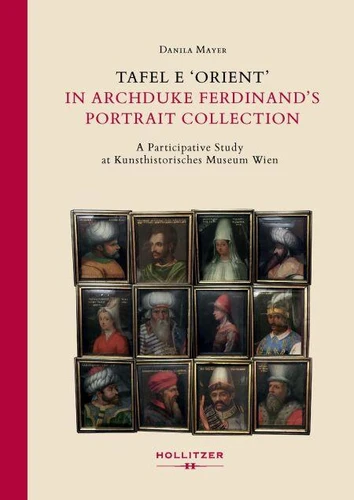
Tafel E 'Orient' in Archduke Ferdinand's Portrait Collection. A Participative Study at Kunsthistorisches Museum Wien
Par :Formats :
Disponible dans votre compte client Decitre ou Furet du Nord dès validation de votre commande. Le format PDF est :
- Compatible avec une lecture sur My Vivlio (smartphone, tablette, ordinateur)
- Compatible avec une lecture sur liseuses Vivlio
- Pour les liseuses autres que Vivlio, vous devez utiliser le logiciel Adobe Digital Edition. Non compatible avec la lecture sur les liseuses Kindle, Remarkable et Sony
 , qui est-ce ?
Notre partenaire de plateforme de lecture numérique où vous retrouverez l'ensemble de vos ebooks gratuitement
Pour en savoir plus sur nos ebooks, consultez notre aide en ligne ici
C'est si simple ! Lisez votre ebook avec l'app Vivlio sur votre tablette, mobile ou ordinateur :

- Nombre de pages196
- FormatPDF
- ISBN978-3-99094-613-8
- EAN9783990946138
- Date de parution12/12/2025
- Protection num.Digital Watermarking
- Taille7 Mo
- Infos supplémentairespdf
- ÉditeurHollitzer Wissenschaftsverlag
Résumé
This volume presents a study of the thirty-four portraits in panel E 'Orient' in the Kunsthistorisches Museum Wien. In this multi-faced object potentates from south-eastern Europe and Ottoman, Persian and African empires are represented. The small oil paintings are copies from the sixteenth century, part of Archduke Ferdinand's collection of almost a thousand postcard-sized images, and are presented in the museum's Münzkabinett.
The portraits are explored in a participative research: Interlocutors in Vienna from different backgrounds share their reactions, impressions and questions in interviews.
The appearances, production, collecting and presentation of the pictures are discussed, and the results of visits to Innsbruck, Como, Istanbul and Florence regarding the history of the portraits complete the work. While some mysteries remain unsolved, the research shows how people in contemporary Vienna interact with sixteenth-century portraits of an 'Orient'.
The appearances, production, collecting and presentation of the pictures are discussed, and the results of visits to Innsbruck, Como, Istanbul and Florence regarding the history of the portraits complete the work. While some mysteries remain unsolved, the research shows how people in contemporary Vienna interact with sixteenth-century portraits of an 'Orient'.