
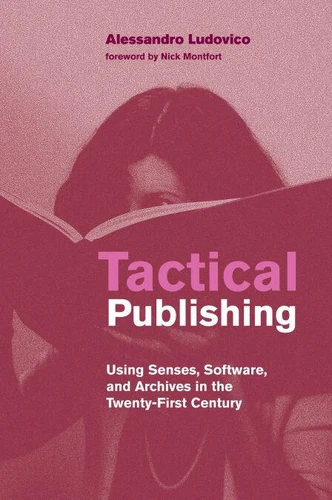
Tactical Publishing. Using Senses, Software, and Archives in the Twenty-First Century
Par : ,Formats :
Disponible dans votre compte client Decitre ou Furet du Nord dès validation de votre commande. Le format ePub protégé est :
- Compatible avec une lecture sur My Vivlio (smartphone, tablette, ordinateur)
- Compatible avec une lecture sur liseuses Vivlio
- Pour les liseuses autres que Vivlio, vous devez utiliser le logiciel Adobe Digital Edition. Non compatible avec la lecture sur les liseuses Kindle, Remarkable et Sony
- Non compatible avec un achat hors France métropolitaine
 , qui est-ce ?
Notre partenaire de plateforme de lecture numérique où vous retrouverez l'ensemble de vos ebooks gratuitement
Pour en savoir plus sur nos ebooks, consultez notre aide en ligne ici
C'est si simple ! Lisez votre ebook avec l'app Vivlio sur votre tablette, mobile ou ordinateur :

- Nombre de pages336
- FormatePub
- ISBN978-0-262-36207-8
- EAN9780262362078
- Date de parution17/12/2024
- Protection num.Adobe DRM
- Taille54 Mo
- Infos supplémentairesepub
- ÉditeurThe MIT Press
Résumé
How to level up to the next transformative phase of publishing-with a critical methodology that transcends the dichotomy of paper and digital media production. Publishing is experiencing one of the most transformative phases in its history. In Tactical Publishing, a sequel to Post-Digital Print, Alessandro Ludovico explores the forces driving this historical phase, highlighting the tremendous opportunities it presents. Our task, he believes, is to develop an alternative publishing system that transcends the dichotomy between paper and digital media.
He focuses first on the two activities on which publishing is premised-reading and writing (with an emphasis on writing machines and post-truth in the latter)-and then deconstructs the concept, proposing alternative strategies inspired by recent practices and unconventional uses of technology. Ludovico shows how the radical and strategic use of print in the past can serve as the basis for our transition to the next phase of publishing.
He argues that the new ecology of publishing should be based on three main elements: the stimulation of our senses, the role of software in forming the publishing infrastructure, and the importance of archives. During this transition from the current post-digital phase to the next phase, independent publishers and artists, as well as readers and machines, will enable new structures and actions that realize the potential of publishing and the preservation of content, thereby enriching social practices.
The author also considers the crucial social role played by new forms of libraries, as artists and publishers shape the coming publishing world in its various manifestations. Combining analytical accounts of tactical strategies with examples from artworks and experimental practices, the book concludes with a manifesto for publishing in the twenty-first century and an appendix with a selection of one hundred publications representing the "periodic table" of future publishing.
He focuses first on the two activities on which publishing is premised-reading and writing (with an emphasis on writing machines and post-truth in the latter)-and then deconstructs the concept, proposing alternative strategies inspired by recent practices and unconventional uses of technology. Ludovico shows how the radical and strategic use of print in the past can serve as the basis for our transition to the next phase of publishing.
He argues that the new ecology of publishing should be based on three main elements: the stimulation of our senses, the role of software in forming the publishing infrastructure, and the importance of archives. During this transition from the current post-digital phase to the next phase, independent publishers and artists, as well as readers and machines, will enable new structures and actions that realize the potential of publishing and the preservation of content, thereby enriching social practices.
The author also considers the crucial social role played by new forms of libraries, as artists and publishers shape the coming publishing world in its various manifestations. Combining analytical accounts of tactical strategies with examples from artworks and experimental practices, the book concludes with a manifesto for publishing in the twenty-first century and an appendix with a selection of one hundred publications representing the "periodic table" of future publishing.