SOLDES
Jusqu'à -70% sur une sélection d'articles*

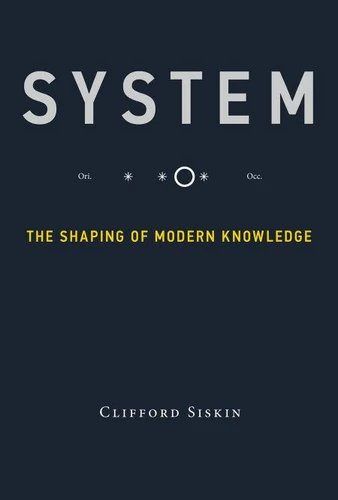
System. The Shaping of Modern Knowledge
Par :Formats :
Disponible dans votre compte client Decitre ou Furet du Nord dès validation de votre commande. Le format ePub protégé est :
- Compatible avec une lecture sur My Vivlio (smartphone, tablette, ordinateur)
- Compatible avec une lecture sur liseuses Vivlio
- Pour les liseuses autres que Vivlio, vous devez utiliser le logiciel Adobe Digital Edition. Non compatible avec la lecture sur les liseuses Kindle, Remarkable et Sony
- Non compatible avec un achat hors France métropolitaine
 , qui est-ce ?
Notre partenaire de plateforme de lecture numérique où vous retrouverez l'ensemble de vos ebooks gratuitement
Pour en savoir plus sur nos ebooks, consultez notre aide en ligne ici
C'est si simple ! Lisez votre ebook avec l'app Vivlio sur votre tablette, mobile ou ordinateur :

- Nombre de pages330
- FormatePub
- ISBN978-0-262-33635-2
- EAN9780262336352
- Date de parution07/10/2016
- Protection num.Adobe DRM
- Taille2 Mo
- Infos supplémentairesepub
- ÉditeurThe MIT Press
Résumé
The role that "system" has played in the shaping and reshaping of modern knowledge, from Galileo and Newton to our own "computational universe."A system can describe what we see (the solar system), operate a computer (Windows 10), or be made on a page (the fourteen engineered lines of a sonnet). In this book, Clifford Siskin shows that system is best understood as a genre-a form that works physically in the world to mediate our efforts to understand it.
Indeed, many Enlightenment authors published works they called "system" to compete with the essay and the treatise. Drawing on the history of system from Galileo's "message from the stars" and Newton's "system of the world" to today's "computational universe, " Siskin illuminates the role that the genre of system has played in the shaping and reshaping of modern knowledge. Previous engagements with systems have involved making them, using them, or imagining better ones.
Siskin offers an innovative perspective by investigating system itself. He considers the past and present, moving from the "system of the world" to "a world full of systems." He traces the turn to system in the seventeenth and eighteenth centuries, and describes this primary form of Enlightenment as a mediator of political, cultural, and social modernity-pointing to the moment when people began to "blame the system" for working both too well ("you can't beat the system") and not well enough (it always seems to "break down").
Throughout, his touchstones are: what system is and how it has changed; how it has mediated knowledge; and how it has worked in the world.
Indeed, many Enlightenment authors published works they called "system" to compete with the essay and the treatise. Drawing on the history of system from Galileo's "message from the stars" and Newton's "system of the world" to today's "computational universe, " Siskin illuminates the role that the genre of system has played in the shaping and reshaping of modern knowledge. Previous engagements with systems have involved making them, using them, or imagining better ones.
Siskin offers an innovative perspective by investigating system itself. He considers the past and present, moving from the "system of the world" to "a world full of systems." He traces the turn to system in the seventeenth and eighteenth centuries, and describes this primary form of Enlightenment as a mediator of political, cultural, and social modernity-pointing to the moment when people began to "blame the system" for working both too well ("you can't beat the system") and not well enough (it always seems to "break down").
Throughout, his touchstones are: what system is and how it has changed; how it has mediated knowledge; and how it has worked in the world.