
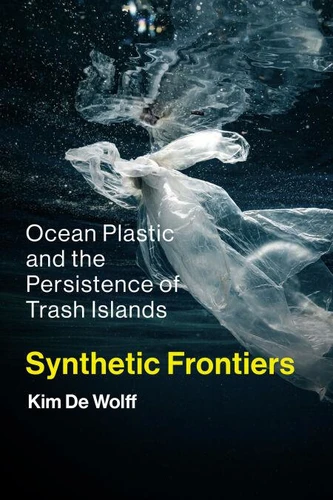
Synthetic Frontiers. Ocean Plastic and the Persistence of Trash Islands
Par :Formats :
Disponible dans votre compte client Decitre ou Furet du Nord dès validation de votre commande. Le format ePub protégé est :
- Compatible avec une lecture sur My Vivlio (smartphone, tablette, ordinateur)
- Compatible avec une lecture sur liseuses Vivlio
- Pour les liseuses autres que Vivlio, vous devez utiliser le logiciel Adobe Digital Edition. Non compatible avec la lecture sur les liseuses Kindle, Remarkable et Sony
- Non compatible avec un achat hors France métropolitaine
 , qui est-ce ?
Notre partenaire de plateforme de lecture numérique où vous retrouverez l'ensemble de vos ebooks gratuitement
Pour en savoir plus sur nos ebooks, consultez notre aide en ligne ici
C'est si simple ! Lisez votre ebook avec l'app Vivlio sur votre tablette, mobile ou ordinateur :

- Nombre de pages208
- FormatePub
- ISBN978-0-262-38532-9
- EAN9780262385329
- Date de parution11/11/2025
- Protection num.Adobe DRM
- Taille35 Mo
- Infos supplémentairesepub
- ÉditeurThe MIT Press
Résumé
How an imaginary island became the symbol of contemporary concern for ocean plastic pollution. A floating plastic island has become a powerful symbol of ocean pollution, but no one can find it at sea. While marine scientists dismiss the trash island as myth, Synthetic Frontiers argues that its persistence is a consequence of dominant ways of knowing and exploiting the Pacific Ocean. Bringing feminist science and technology studies approaches to materiality together with hydrohumanities critiques of terracentrism, Kim De Wolff shows how ocean plastic pollution is shaped by land/water divides and the fluidities that defy them.
The trash island is no mere misrepresentation. It is a synthetic frontier: a territorial line of control that emerges with the products of modern science, and transforms crises of petrocapitalism into landscapes of so-called progress. As such, the story of the trash island-a story where knowledge and awareness of global ecological problems so often fail to instigate meaningful change-is simultaneously about the persistence of plastic pollution and all its associated harms.
Where cleanup solutions recycle plastic into ever-more polluted landscapes, De Wolff proposes radically reclaiming synthetics from modern chemistry and modern philosophy in a refusal of elemental frontiers.
The trash island is no mere misrepresentation. It is a synthetic frontier: a territorial line of control that emerges with the products of modern science, and transforms crises of petrocapitalism into landscapes of so-called progress. As such, the story of the trash island-a story where knowledge and awareness of global ecological problems so often fail to instigate meaningful change-is simultaneously about the persistence of plastic pollution and all its associated harms.
Where cleanup solutions recycle plastic into ever-more polluted landscapes, De Wolff proposes radically reclaiming synthetics from modern chemistry and modern philosophy in a refusal of elemental frontiers.