SOLDES
Jusqu'à -70% sur une sélection d'articles*

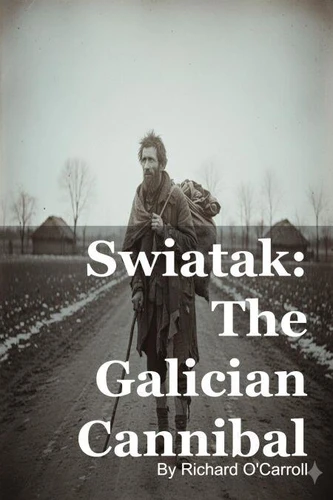
Swiatak: The Galician Cannibal
Par :Formats :
Disponible dans votre compte client Decitre ou Furet du Nord dès validation de votre commande. Le format ePub est :
- Compatible avec une lecture sur My Vivlio (smartphone, tablette, ordinateur)
- Compatible avec une lecture sur liseuses Vivlio
- Pour les liseuses autres que Vivlio, vous devez utiliser le logiciel Adobe Digital Edition. Non compatible avec la lecture sur les liseuses Kindle, Remarkable et Sony
 , qui est-ce ?
Notre partenaire de plateforme de lecture numérique où vous retrouverez l'ensemble de vos ebooks gratuitement
Pour en savoir plus sur nos ebooks, consultez notre aide en ligne ici
C'est si simple ! Lisez votre ebook avec l'app Vivlio sur votre tablette, mobile ou ordinateur :

- FormatePub
- ISBN8232022334
- EAN9798232022334
- Date de parution09/12/2025
- Protection num.pas de protection
- Infos supplémentairesepub
- ÉditeurDraft2Digital
Résumé
Swiatak: The Galician CannibalIn 1849, Imperial investigator Hofrat Maximilian Werner von Steinhardt is dispatched to Galicia-the Habsburg Empire's poorest province-to investigate a vagrant accused of murdering and cannibalizing children. What begins as a straightforward criminal case becomes a devastating confrontation with systemic evil. Swiatek, the accused, is a man without conscience, moral feeling, or even a surname-one of tens of thousands existing outside society in a province where 160, 000 die annually from preventable starvation and disease.
As von Steinhardt meticulously documents six confirmed murders (and suspects eight more), he discovers that the real crime is not one man's predation but the Empire's deliberate neglect of an entire population. When Swiatek cheats the gallows through suicide, von Steinhardt's disillusionment is complete. His comprehensive reports documenting both individual and systemic crimes are sanitized, buried, and ultimately mythologized-transformed in popular memory into folklore about werewolves rather than a devastating indictment of imperial policy.
Based on actual conditions in 19th-century Austrian Galicia, this literary historical novel explores how societies create the monsters they then prosecute, how justice becomes complicit in injustice, and how truth is systematically erased by the powerful. It is a meditation on responsibility, complicity, and the limits of individual conscience within irredeemably corrupt systems.
As von Steinhardt meticulously documents six confirmed murders (and suspects eight more), he discovers that the real crime is not one man's predation but the Empire's deliberate neglect of an entire population. When Swiatek cheats the gallows through suicide, von Steinhardt's disillusionment is complete. His comprehensive reports documenting both individual and systemic crimes are sanitized, buried, and ultimately mythologized-transformed in popular memory into folklore about werewolves rather than a devastating indictment of imperial policy.
Based on actual conditions in 19th-century Austrian Galicia, this literary historical novel explores how societies create the monsters they then prosecute, how justice becomes complicit in injustice, and how truth is systematically erased by the powerful. It is a meditation on responsibility, complicity, and the limits of individual conscience within irredeemably corrupt systems.