
M. J. Trow is an historian and writer whose books include A Brief History of Vampires. His documentary on Cleopatra was recently screened on the National Geographic Channel. Originally from Rhondda, South Wales, he lives on the Isle of Wight.
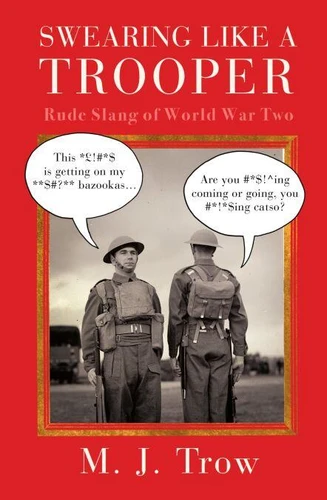
Swearing Like A Trooper. Rude Slang of World War Two
Par :Formats :
Disponible dans votre compte client Decitre ou Furet du Nord dès validation de votre commande. Le format ePub protégé est :
- Compatible avec une lecture sur My Vivlio (smartphone, tablette, ordinateur)
- Compatible avec une lecture sur liseuses Vivlio
- Pour les liseuses autres que Vivlio, vous devez utiliser le logiciel Adobe Digital Edition. Non compatible avec la lecture sur les liseuses Kindle, Remarkable et Sony
- Non compatible avec un achat hors France métropolitaine
 , qui est-ce ?
Notre partenaire de plateforme de lecture numérique où vous retrouverez l'ensemble de vos ebooks gratuitement
Pour en savoir plus sur nos ebooks, consultez notre aide en ligne ici
C'est si simple ! Lisez votre ebook avec l'app Vivlio sur votre tablette, mobile ou ordinateur :

- Nombre de pages128
- FormatePub
- ISBN978-1-4721-0983-5
- EAN9781472109835
- Date de parution16/10/2013
- Protection num.Adobe DRM
- Infos supplémentairesepub
- ÉditeurConstable
Résumé
In September 1939, much military slang still dated to the trenches of 1914-18 - for instance words such as 'Berthas' (meaning big breasts), taken from the German Big Bertha gun . But World War II soon gave birth to a new wave of armed forces slang such as 'wizard prang', D. S. O (Dick Shot Off), and bazookas (back to breasts again). Some British terms came from the army's links with India, for instance 'zig-zig' or 'jig-jig' meaning sexual intercourse.
Officers' euphemisms had to be acceptable in the Mess, for instance to 'lose one's cherry', 'extra-curricular activities', 'naval engagements' and 'dishonourable discharge'. The Americans were over-paid, over-sexed and over here and brought new slang with them: 'nugget' for a girl, 'on the rag' meant having a period and 'cheesecake' was GI slang for a gorgeous girl. And this was People's War, with civilians, women and children effectively in the front line.
Women in particular were smoking, drinking, dancing and swearing like no female generation before...
Officers' euphemisms had to be acceptable in the Mess, for instance to 'lose one's cherry', 'extra-curricular activities', 'naval engagements' and 'dishonourable discharge'. The Americans were over-paid, over-sexed and over here and brought new slang with them: 'nugget' for a girl, 'on the rag' meant having a period and 'cheesecake' was GI slang for a gorgeous girl. And this was People's War, with civilians, women and children effectively in the front line.
Women in particular were smoking, drinking, dancing and swearing like no female generation before...
A propos de M. Trow
3,99 €