
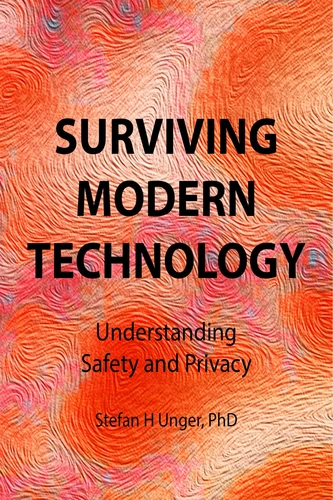
Surviving Modern Technology: Understanding Safety and Privacy
Par :Formats :
Disponible dans votre compte client Decitre ou Furet du Nord dès validation de votre commande. Le format ePub est :
- Compatible avec une lecture sur My Vivlio (smartphone, tablette, ordinateur)
- Compatible avec une lecture sur liseuses Vivlio
- Pour les liseuses autres que Vivlio, vous devez utiliser le logiciel Adobe Digital Edition. Non compatible avec la lecture sur les liseuses Kindle, Remarkable et Sony
 , qui est-ce ?
Notre partenaire de plateforme de lecture numérique où vous retrouverez l'ensemble de vos ebooks gratuitement
Pour en savoir plus sur nos ebooks, consultez notre aide en ligne ici
C'est si simple ! Lisez votre ebook avec l'app Vivlio sur votre tablette, mobile ou ordinateur :

- FormatePub
- ISBN978-1-310-73143-3
- EAN9781310731433
- Date de parution12/09/2014
- Protection num.pas de protection
- Infos supplémentairesepub
- ÉditeurJPCA
Résumé
Computers are wonderful. The internet is fantastic. You are not safe online . unless you work at it. Every week there are several new revelations about security weaknesses in our hardware and software, theft of millions of pieces of personal information, and new software and techniques to combat cybercriminals. The goals of this book are to help motivate you to take some action and to teach you how to think about the privacy and security of your information and devices.
But tt's not so much a "how to" book (i.e., what buttons to press) as a "why to" book because "how to" is limited to the next hardware or software update or data breach that exposes yet another problem. "Why to" teaches how to think about this problem so you can better understand the changes coming and when to take action.. This book discusses five levels of security: Physical, Access, System, Application and Behavioral for the general user in easy to understand, practical terms.
The author has nearly 50 years experience with all types and aspects of computers, software, and policy from many different perspectives.
But tt's not so much a "how to" book (i.e., what buttons to press) as a "why to" book because "how to" is limited to the next hardware or software update or data breach that exposes yet another problem. "Why to" teaches how to think about this problem so you can better understand the changes coming and when to take action.. This book discusses five levels of security: Physical, Access, System, Application and Behavioral for the general user in easy to understand, practical terms.
The author has nearly 50 years experience with all types and aspects of computers, software, and policy from many different perspectives.
Computers are wonderful. The internet is fantastic. You are not safe online . unless you work at it. Every week there are several new revelations about security weaknesses in our hardware and software, theft of millions of pieces of personal information, and new software and techniques to combat cybercriminals. The goals of this book are to help motivate you to take some action and to teach you how to think about the privacy and security of your information and devices.
But tt's not so much a "how to" book (i.e., what buttons to press) as a "why to" book because "how to" is limited to the next hardware or software update or data breach that exposes yet another problem. "Why to" teaches how to think about this problem so you can better understand the changes coming and when to take action.. This book discusses five levels of security: Physical, Access, System, Application and Behavioral for the general user in easy to understand, practical terms.
The author has nearly 50 years experience with all types and aspects of computers, software, and policy from many different perspectives.
But tt's not so much a "how to" book (i.e., what buttons to press) as a "why to" book because "how to" is limited to the next hardware or software update or data breach that exposes yet another problem. "Why to" teaches how to think about this problem so you can better understand the changes coming and when to take action.. This book discusses five levels of security: Physical, Access, System, Application and Behavioral for the general user in easy to understand, practical terms.
The author has nearly 50 years experience with all types and aspects of computers, software, and policy from many different perspectives.