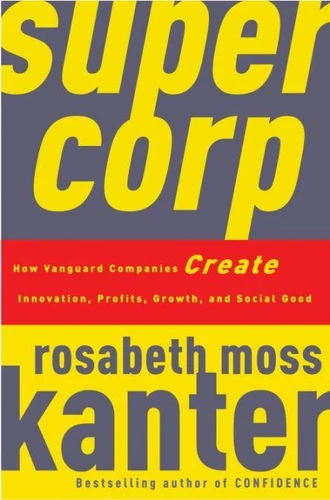
SuperCorp. How Vanguard Companies Create Innovation, Profits, Growth, and Social Good
Par :Formats :
Disponible dans votre compte client Decitre ou Furet du Nord dès validation de votre commande. Le format ePub protégé est :
- Compatible avec une lecture sur My Vivlio (smartphone, tablette, ordinateur)
- Compatible avec une lecture sur liseuses Vivlio
- Pour les liseuses autres que Vivlio, vous devez utiliser le logiciel Adobe Digital Edition. Non compatible avec la lecture sur les liseuses Kindle, Remarkable et Sony
- Non compatible avec un achat hors France métropolitaine
 , qui est-ce ?
Notre partenaire de plateforme de lecture numérique où vous retrouverez l'ensemble de vos ebooks gratuitement
Pour en savoir plus sur nos ebooks, consultez notre aide en ligne ici
C'est si simple ! Lisez votre ebook avec l'app Vivlio sur votre tablette, mobile ou ordinateur :

- Nombre de pages336
- FormatePub
- ISBN978-0-307-45227-6
- EAN9780307452276
- Date de parution25/08/2009
- Protection num.Adobe DRM
- Taille2 Mo
- Infos supplémentairesepub
- ÉditeurCrown Currency
Résumé
Rosabeth Moss Kanter on the answer to the global crisis of business and American-style capitalism. Out of the ashes of conventional business models arises a set of companies using their power not only for profits and sustainable growth but also social good. If you think business corporations are doomed to be lumbering, bloated, and corrupt, think again. Based on an extraordinary three-year investigation, interviewing more than 350 key people at major companies around the world, Rosabeth Moss Kanter provides encouraging and astounding evidence that this assumption is completely outdated.
The businesses that are agile, keeping ahead of the curve in terms of market changes and customer needs, are the businesses that are also progressive, socially responsible human communities. Take IBM. When the tsunami and earthquake struck Asia, IBM didn' t just cut a check for relief funds and call it a day. The company used its technological expertise and skilled people to create what government and relief agencies could not: information systems to effectively track relief supplies and reunite families.
While IBM did this with no commercial motive, its employees' desire to serve people suffering during these crises stimulated innovations that later benefited the company. Or Proctor & Gamble. Despite a decade-long commitment to research and development of a water purification product, commercial prospects were unpromising. But because it was so consistent with P&G's statement of purpose, people within the company persevered.
And when the tsunami struck, it was then able to deliver roughly a billion glasses of drinking water for the victims, earning plaudits from aid partners, the media, governments, and crucially, P&G employees. SuperCorp captures the zeitgeist of the emerging twenty-first-century business. For example: . The strong potential synergy between financial performance and attention to community and social needs.
The unique competitive advantage from embracing the values and expectations of a new generation of professionals. The growth opportunities that result from stressing values and supressing executive egos when seeking partners and integrating acquisitionsSuperCorp is a remarkable look at the business of the future and the management skills required to get there. IBM, Banco Real, P&G, Cemex, Omron, and other companies reported on now move with the rapidity and creativity of much smaller enterprises.
These companies are not perfect, but when people are empowered and values drive decisions, everything can come together in magical "Rubik's Cube moments" of deep satisfaction. Kanter's compelling and inspiring stories show that people are more inclined to be creative when their company values innovation that helps the world.
The businesses that are agile, keeping ahead of the curve in terms of market changes and customer needs, are the businesses that are also progressive, socially responsible human communities. Take IBM. When the tsunami and earthquake struck Asia, IBM didn' t just cut a check for relief funds and call it a day. The company used its technological expertise and skilled people to create what government and relief agencies could not: information systems to effectively track relief supplies and reunite families.
While IBM did this with no commercial motive, its employees' desire to serve people suffering during these crises stimulated innovations that later benefited the company. Or Proctor & Gamble. Despite a decade-long commitment to research and development of a water purification product, commercial prospects were unpromising. But because it was so consistent with P&G's statement of purpose, people within the company persevered.
And when the tsunami struck, it was then able to deliver roughly a billion glasses of drinking water for the victims, earning plaudits from aid partners, the media, governments, and crucially, P&G employees. SuperCorp captures the zeitgeist of the emerging twenty-first-century business. For example: . The strong potential synergy between financial performance and attention to community and social needs.
The unique competitive advantage from embracing the values and expectations of a new generation of professionals. The growth opportunities that result from stressing values and supressing executive egos when seeking partners and integrating acquisitionsSuperCorp is a remarkable look at the business of the future and the management skills required to get there. IBM, Banco Real, P&G, Cemex, Omron, and other companies reported on now move with the rapidity and creativity of much smaller enterprises.
These companies are not perfect, but when people are empowered and values drive decisions, everything can come together in magical "Rubik's Cube moments" of deep satisfaction. Kanter's compelling and inspiring stories show that people are more inclined to be creative when their company values innovation that helps the world.