SOLDES
Jusqu'à -70% sur une sélection d'articles*

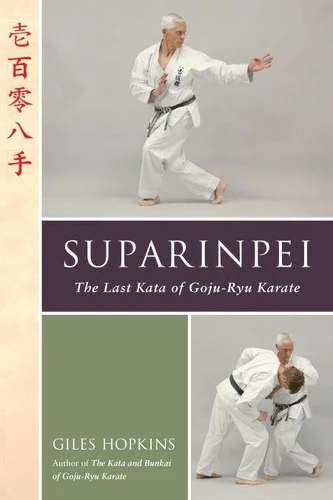
Suparinpei. The Last Kata of Goju-Ryu Karate
Par :Formats :
Disponible dans votre compte client Decitre ou Furet du Nord dès validation de votre commande. Le format ePub protégé est :
- Compatible avec une lecture sur My Vivlio (smartphone, tablette, ordinateur)
- Compatible avec une lecture sur liseuses Vivlio
- Pour les liseuses autres que Vivlio, vous devez utiliser le logiciel Adobe Digital Edition. Non compatible avec la lecture sur les liseuses Kindle, Remarkable et Sony
- Non compatible avec un achat hors France métropolitaine
 , qui est-ce ?
Notre partenaire de plateforme de lecture numérique où vous retrouverez l'ensemble de vos ebooks gratuitement
Pour en savoir plus sur nos ebooks, consultez notre aide en ligne ici
C'est si simple ! Lisez votre ebook avec l'app Vivlio sur votre tablette, mobile ou ordinateur :

- Nombre de pages256
- FormatePub
- ISBN978-1-62317-559-7
- EAN9781623175597
- Date de parution11/05/2021
- Protection num.Adobe DRM
- Taille27 Mo
- Infos supplémentairesepub
- ÉditeurBlue Snake Books
Résumé
An illustrated step-by-step guide to the structure, themes, and techniques of Suparinpei--the last kata of Goju-ryu. Suparinpei, or Pechurin, is the highest and most difficult kata in the Goju-ryu system of Okinawan karate. Its performance has long been reserved for high-level practitioners, its history and applications obscured by misunderstanding and misinterpretation. In this indispensable manual by experienced master Giles Hopkins, readers will learn the skills, techniques, and bunkai of this little-understood kata, step by step.
Suparinpei explores the initial receiving, bridging, controlling, and lethal finishing techniques in sequence, and offers illustrations of both the applications and movements of Suparinpei. Hopkins questions conventional interpretations of kata movements, suggesting instead that there is only one originally intended application for each move in kata, and that each is to be understood in sequence and not as isolated components.
This strict interpretation of kata movements reveals not only realistic self-defense executions, but also potentially the original intent of kata.
Suparinpei explores the initial receiving, bridging, controlling, and lethal finishing techniques in sequence, and offers illustrations of both the applications and movements of Suparinpei. Hopkins questions conventional interpretations of kata movements, suggesting instead that there is only one originally intended application for each move in kata, and that each is to be understood in sequence and not as isolated components.
This strict interpretation of kata movements reveals not only realistic self-defense executions, but also potentially the original intent of kata.