
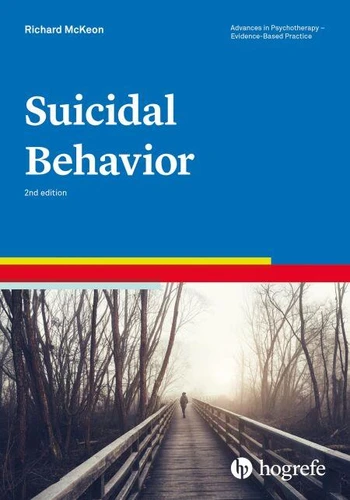
Suicidal Behavior
Par :Formats :
Disponible dans votre compte client Decitre ou Furet du Nord dès validation de votre commande. Le format ePub est :
- Compatible avec une lecture sur My Vivlio (smartphone, tablette, ordinateur)
- Compatible avec une lecture sur liseuses Vivlio
- Pour les liseuses autres que Vivlio, vous devez utiliser le logiciel Adobe Digital Edition. Non compatible avec la lecture sur les liseuses Kindle, Remarkable et Sony
 , qui est-ce ?
Notre partenaire de plateforme de lecture numérique où vous retrouverez l'ensemble de vos ebooks gratuitement
Pour en savoir plus sur nos ebooks, consultez notre aide en ligne ici
C'est si simple ! Lisez votre ebook avec l'app Vivlio sur votre tablette, mobile ou ordinateur :

- Nombre de pages120
- FormatePub
- ISBN978-1-61334-506-1
- EAN9781613345061
- Date de parution11/04/2022
- Protection num.Digital Watermarking
- Taille3 Mo
- Infos supplémentairesepub
- ÉditeurHogrefe Publishing
Résumé
A new edition with the latest approaches to assessment and treatment of suicidal behavior
With more than 800, 000 deaths worldwide each year, suicide is one of the leading causes of death. The second edition of this volume incorporates the latest research, showing which empirically supported approaches to assessment, management, and treatment really help those at risk. Updates include comprehensively updated epidemiological data, the role opioid use problems, personality disorders, and trauma play in suicide, new models explaining the development of suicidal ideation, and the zero suicide model.
This book aims to increase clinicians' access to empirically supported interventions for suicidal behavior, with the hope that these methods will become the standard in clinical practice. The book is invaluable as a compact how-to reference for clinicians in their daily work and as an educational resource for students and for practice-oriented continuing education. Its reader-friendly structure makes liberal use of tables, boxed clinical examples, and clinical vignettes.
The book, which also addresses common obstacles in treating individuals at risk for suicide, is an essential resource for anyone working with this high-risk population.
This book aims to increase clinicians' access to empirically supported interventions for suicidal behavior, with the hope that these methods will become the standard in clinical practice. The book is invaluable as a compact how-to reference for clinicians in their daily work and as an educational resource for students and for practice-oriented continuing education. Its reader-friendly structure makes liberal use of tables, boxed clinical examples, and clinical vignettes.
The book, which also addresses common obstacles in treating individuals at risk for suicide, is an essential resource for anyone working with this high-risk population.