
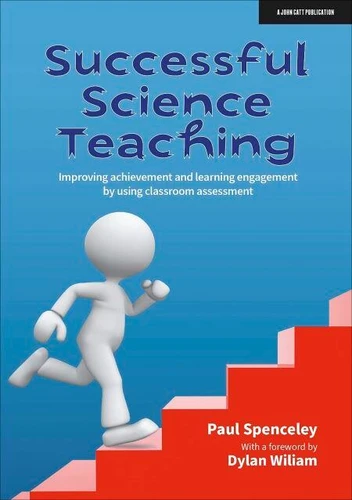
Successful Science Teaching: Improving achievement and learning engagement by using classroom assessment
Par :Formats :
Disponible dans votre compte client Decitre ou Furet du Nord dès validation de votre commande. Le format ePub protégé est :
- Compatible avec une lecture sur My Vivlio (smartphone, tablette, ordinateur)
- Compatible avec une lecture sur liseuses Vivlio
- Pour les liseuses autres que Vivlio, vous devez utiliser le logiciel Adobe Digital Edition. Non compatible avec la lecture sur les liseuses Kindle, Remarkable et Sony
- Non compatible avec un achat hors France métropolitaine
 , qui est-ce ?
Notre partenaire de plateforme de lecture numérique où vous retrouverez l'ensemble de vos ebooks gratuitement
Pour en savoir plus sur nos ebooks, consultez notre aide en ligne ici
C'est si simple ! Lisez votre ebook avec l'app Vivlio sur votre tablette, mobile ou ordinateur :

- Nombre de pages188
- FormatePub
- ISBN978-1-914351-94-5
- EAN9781914351945
- Date de parution13/01/2022
- Protection num.Adobe DRM
- Infos supplémentairesepub
- ÉditeurJohn Catt
Résumé
Teachers simply do not have the time to do any more work. Yet the pressure to improve results is ever-upwards. The emphasis in this book is not on doing anything extra, but on doing all the everyday things that science teachers do - planning lessons, marking work and exams, providing feedback, and getting students involved in discussions, or self and peer-assessment - in a slightly different way. The book is full of simple, practical, formative assessment techniques and strategies, based on real classroom practices, repeated across the range of ages and abilities at secondary levels, in a variety of schools, that have been repeatedly shown to significantly improve examination results, and student involvement in lessons.
Whether you are just about to embark on a career as a science teacher, or you have been one for many years, there is bound to be something here.
Whether you are just about to embark on a career as a science teacher, or you have been one for many years, there is bound to be something here.