SOLDES
Jusqu'à -70% sur une sélection d'articles*

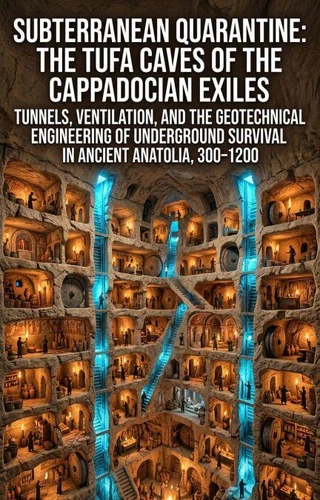
Subterranean Quarantine: The Tufa Caves of the Cappadocian Exiles. Tunnels, Ventilation, and the Geotechnical Engineering of Underground Survival in Ancient Anatolia, 300–1200
Par :Formats :
Disponible dans votre compte client Decitre ou Furet du Nord dès validation de votre commande. Le format ePub est :
- Compatible avec une lecture sur My Vivlio (smartphone, tablette, ordinateur)
- Compatible avec une lecture sur liseuses Vivlio
- Pour les liseuses autres que Vivlio, vous devez utiliser le logiciel Adobe Digital Edition. Non compatible avec la lecture sur les liseuses Kindle, Remarkable et Sony
 , qui est-ce ?
Notre partenaire de plateforme de lecture numérique où vous retrouverez l'ensemble de vos ebooks gratuitement
Pour en savoir plus sur nos ebooks, consultez notre aide en ligne ici
C'est si simple ! Lisez votre ebook avec l'app Vivlio sur votre tablette, mobile ou ordinateur :

- Nombre de pages187
- FormatePub
- ISBN978-3-565-41422-2
- EAN9783565414222
- Date de parution16/04/2026
- Protection num.pas de protection
- Taille996 Ko
- Infos supplémentairesepub
- ÉditeurEmphaloz Publishing House
Résumé
When conquering armies swept across the plains of Asia Minor, the local inhabitants did not build higher walls to defend themselves; they simply vanished into the earth. The volcanic landscape of Cappadocia conceals a staggering architectural anomaly: massive, multi-level underground metropolises carved directly into the soft tufa rock, capable of sustaining tens of thousands of people for months at a time.
Subterranean Quarantine unveils the brilliant geotechnical engineering of Derinkuyu and Kaymakli.
These ancient exiles did not merely dig caves; they constructed complex, highly pressurized ventilation shafts that circulated fresh air hundreds of feet below the surface. Heavy, monolithic rolling stone doors secured the narrow choke points, while deep-earth aquifers provided an inexhaustible, untainted water supply during prolonged above-ground sieges. Deconstruct the claustrophobic survival mechanics of antiquity.
Explore how marginalized religious factions weaponized geology to create an impenetrable, subterranean fortress, forging a shadow civilization that thrived entirely in the dark.
These ancient exiles did not merely dig caves; they constructed complex, highly pressurized ventilation shafts that circulated fresh air hundreds of feet below the surface. Heavy, monolithic rolling stone doors secured the narrow choke points, while deep-earth aquifers provided an inexhaustible, untainted water supply during prolonged above-ground sieges. Deconstruct the claustrophobic survival mechanics of antiquity.
Explore how marginalized religious factions weaponized geology to create an impenetrable, subterranean fortress, forging a shadow civilization that thrived entirely in the dark.